Screen-time totals can tell parents how long a device was open, but not what happened during those minutes. Ten passive minutes of autoplay and ten focused minutes of guided reasoning are not the same learning experience.
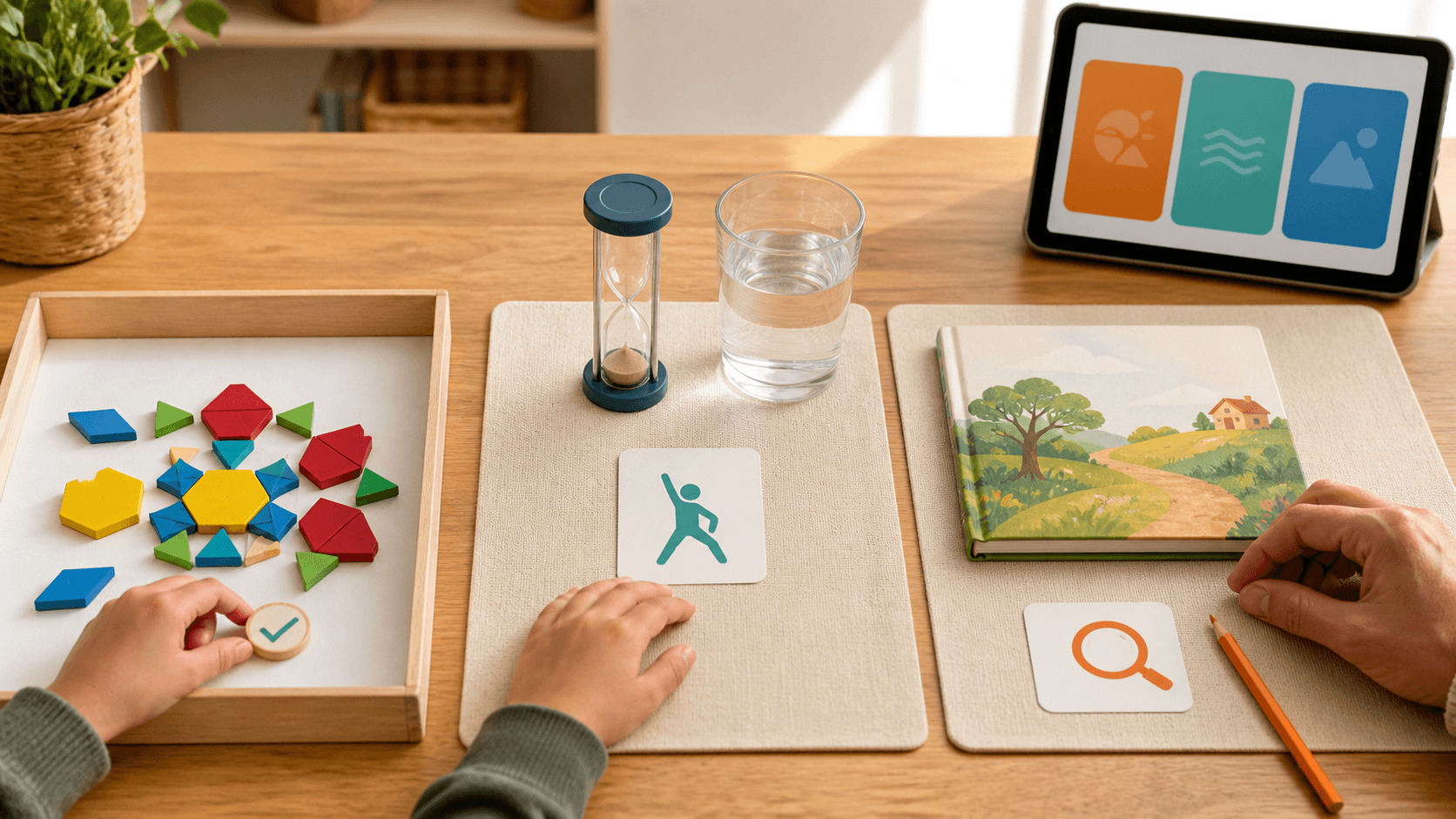
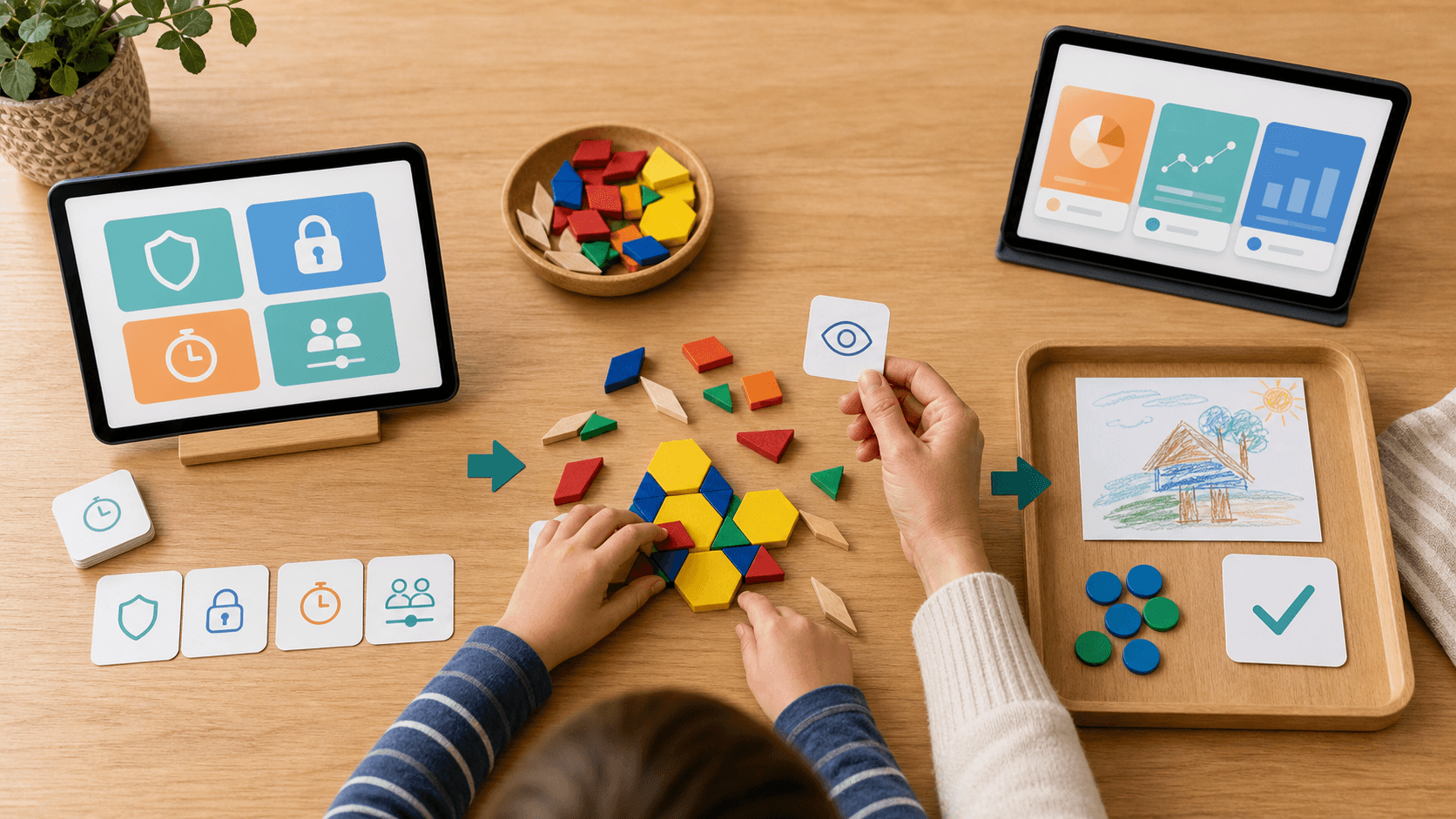
Use four questions. Did the screen have a clear purpose? Did the child think, explain, choose, or create instead of only tapping through? Did the digital step lead into something off-screen—manipulatives, reading aloud, a sketch, movement, an observation, or a real-life task? And did the session have a visible stopping point?
A strong AI-supported learning loop is often brief: the tutor identifies the next step, offers one useful hint, checks understanding, and then sends the learner back to doing. The screen is a guide and feedback surface, not the whole school day.
Quality also depends on learner fit. A gifted or high-IQ child may need a deeper question rather than more repetitions. A child with ADHD, an autistic learner, or a twice-exceptional / 2e profile may benefit from shorter turns, lower sensory load, a visual pause, or another explanation style. Adjust pace, review, challenge, and presentation without turning those choices into a diagnosis, therapy, or promised outcome.
For homeschooling and worldschooling parents, the practical rhythm is simple: preview the mission, do the thinking, leave the screen, collect one small proof, and stop. That proof might be a model, a spoken explanation, a field-note sketch, or a photo of a project—not another hour online.
SchoolQuest AI is the structured learning part of the Little AI Minds Universe. It supports finite missions, mastery checks, review, and parent-visible evidence. When the core learning loop is complete and the family wants broader creative AI projects, the SchoolQuest AI + Little AI Minds family path keeps those two jobs clear instead of blending every activity into more screen time.
The goal is not to defend unlimited device use or chase a perfect universal number. It is to make every digital minute earn its place: purposeful, active, connected to the real world, visible to parents, and easy to end.
Next decision
Turn a guide into a concrete family step
Choose the next route based on what you are deciding now: a first calm week, complete Grade 1-6 coverage, family fit before you create an account, or phone/tablet use for gifted/high-IQ, ADHD, autistic, 2e, and mixed-pace learners.
Start with one calm week
Use the starter guide when your family needs a practical rhythm for attention, confidence, sensory load, and different learning paces before changing everything.
Open starter guideCheck full primary coverage
Open the program map when you need to see how math, reading, writing, science, geography, projects, life skills, and portfolio evidence fit together.
Open program mapUse both apps as one family path
Use SchoolQuest AI for weekly rhythm, mastery checks, records, and parent review. Add Little AI Minds when core learning is done and a bigger creative AI project makes sense.
See the family bundle pathDecide whether SchoolQuest fits now
Review the fit signals families should understand before joining: High-IQ, ADHD, autism, 2e, mixed learning styles, boundaries, help rhythm, and what should be clear before any paid access.
Review family fitTry the app surface on devices
Use the install page when you want the learning area and parent view on a phone or tablet while articles, pricing, and legal information stay in the browser.
Open install guideAI Homeschooling Starter Guide
Get the starter guide
Join the guide list and we will use this interest signal to send the right next steps.