A homeschool day can have strong lessons and still unravel in the minutes between them. Closing mathematics, shifting into reading, or returning after movement asks a child to stop one mental set and enter another. For mixed-pace, gifted, ADHD, autistic, sensory-sensitive, or twice-exceptional / 2e learners, that invisible demand can be harder than the next task itself.
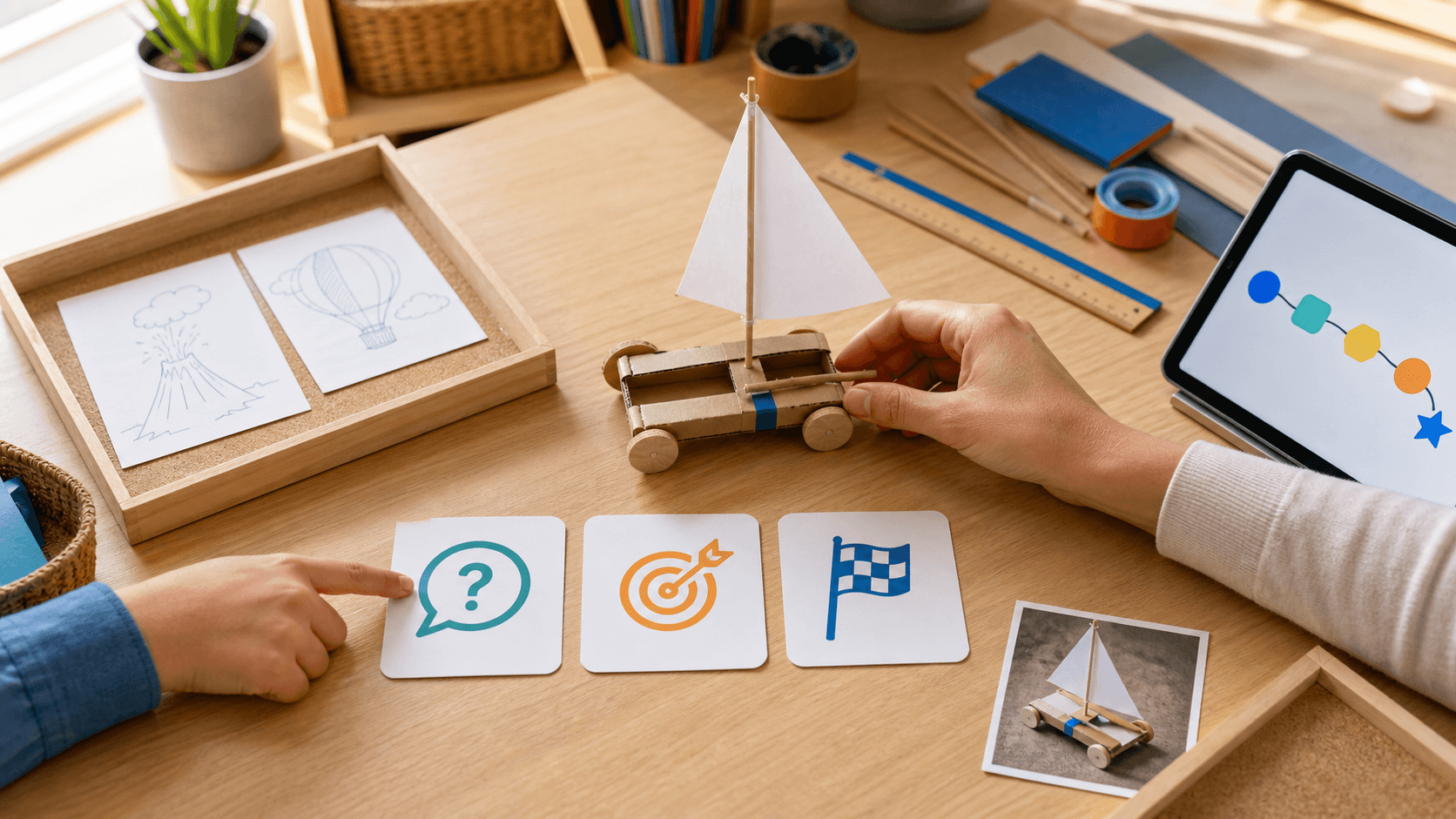
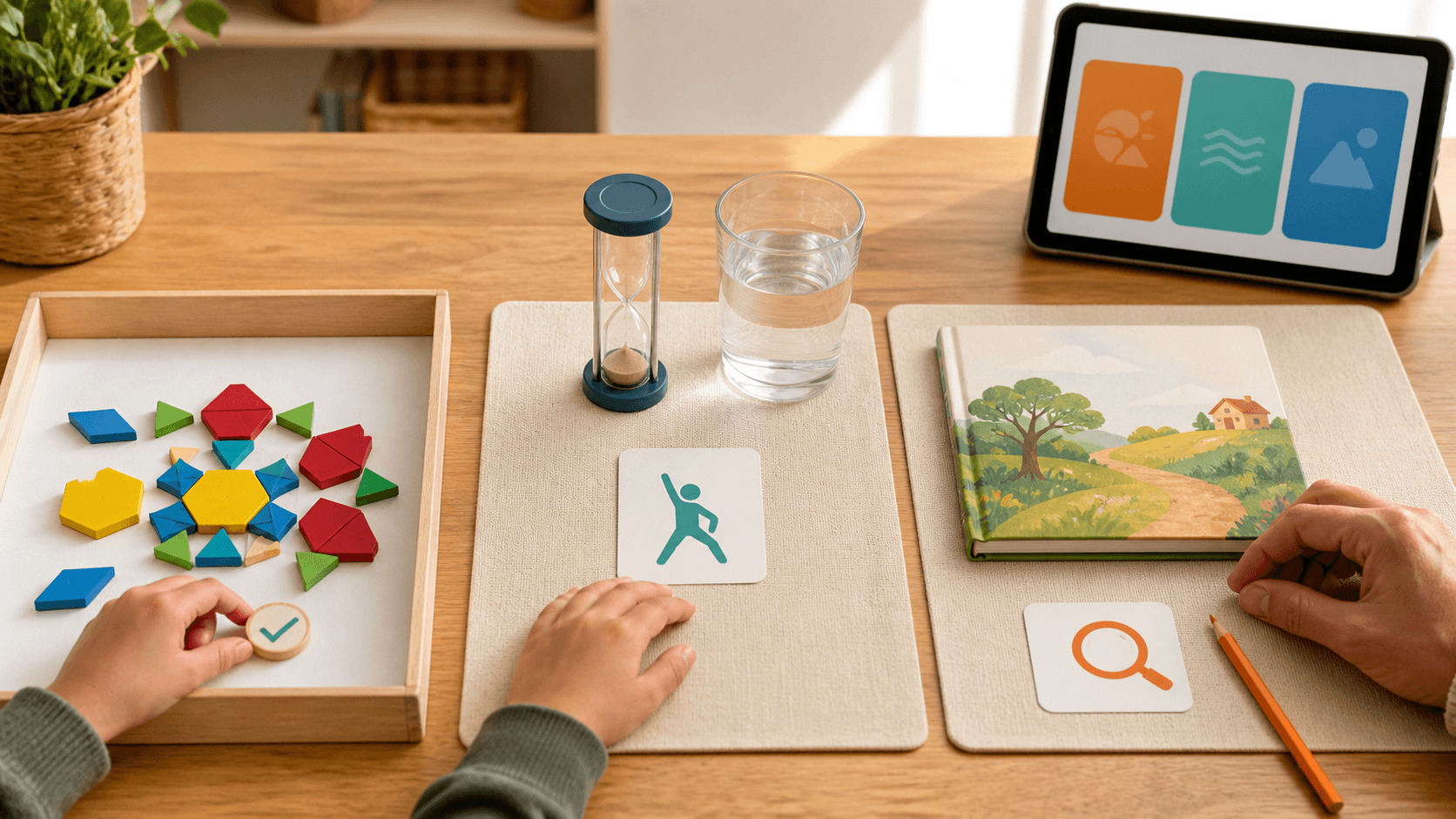
Use one repeatable three-step bridge: close, reset, preview. Close the current subject with one visible signal: place the work in a finished tray, save one answer, or say what was learned. The goal is not a full review. It is to make the ending real so unfinished thoughts do not follow the child into the next subject.
Reset the body and workspace before giving another instruction. Offer water, one stretch, a short walk, or thirty quiet seconds while the previous materials leave the table. Keep the reset finite and predictable. It is a transition, not a reward that must be earned and not an unbounded break that creates another difficult ending.
Preview only the first move of the next subject: open the book to one page, choose the first card, or hear the first question. Avoid announcing the whole lesson. A small preview reduces uncertainty while preserving genuine choice about pace, explanation style, response format, sensory load, and level of challenge.
Parents can review the routine by watching the bridge, not blaming the child. If transitions repeatedly stall, change one variable: shorten the close, reduce objects on the table, make the reset more physical, or simplify the preview. This is learning design, not diagnosis, therapy, a cure, or a guaranteed outcome.
SchoolQuest AI is part of the Little AI Minds Universe. SchoolQuest can keep the next subject, mastery signal, parent review, and finish point visible without filling the transition with extra prompts. When the structured learning rhythm is complete, broader creative AI projects can live in Little AI Minds without blurring the boundary between core learning and open-ended creation.
Next decision
Turn a guide into a concrete family step
Choose the next route based on what you are deciding now: a first calm week, complete Grade 1-6 coverage, family fit before you create an account, or phone/tablet use for gifted/high-IQ, ADHD, autistic, 2e, and mixed-pace learners.
Start with one calm week
Use the starter guide when your family needs a practical rhythm for attention, confidence, sensory load, and different learning paces before changing everything.
Open starter guideCheck full primary coverage
Open the program map when you need to see how math, reading, writing, science, geography, projects, life skills, and portfolio evidence fit together.
Open program mapUse both apps as one family path
Use SchoolQuest AI for weekly rhythm, mastery checks, records, and parent review. Add Little AI Minds when core learning is done and a bigger creative AI project makes sense.
See the family bundle pathDecide whether SchoolQuest fits now
Review the fit signals families should understand before joining: High-IQ, ADHD, autism, 2e, mixed learning styles, boundaries, help rhythm, and what should be clear before any paid access.
Review family fitTry the app surface on devices
Use the install page when you want the learning area and parent view on a phone or tablet while articles, pricing, and legal information stay in the browser.
Open install guideAI Homeschooling Starter Guide
Get the starter guide
Join the guide list and we will use this interest signal to send the right next steps.