Start with one calm week
Use the starter guide when your family needs a practical rhythm for attention, confidence, sensory load, and different learning paces before changing everything.
Open starter guide Back to app
SchoolQuest AI Journal
Guides for homeschooling and worldschooling parents supporting gifted/high-IQ, ADHD, autistic, neurodivergent, and self-paced learners.
Starter guideAI Homeschooling Starter Guide
Join the guide list and we will use this interest signal to send the right next steps.
Next decision
Choose the next route based on what you are deciding now: a first calm week, complete Grade 1-6 coverage, family fit before you create an account, or phone/tablet use for gifted/high-IQ, ADHD, autistic, 2e, and mixed-pace learners.
Use the starter guide when your family needs a practical rhythm for attention, confidence, sensory load, and different learning paces before changing everything.
Open starter guideOpen the program map when you need to see how math, reading, writing, science, geography, projects, life skills, and portfolio evidence fit together.
Open program mapUse SchoolQuest AI for weekly rhythm, mastery checks, records, and parent review. Add Little AI Minds when core learning is done and a bigger creative AI project makes sense.
See the family bundle pathReview the fit signals families should understand before joining: High-IQ, ADHD, autism, 2e, mixed learning styles, boundaries, help rhythm, and what should be clear before any paid access.
Review family fitUse the install page when you want the learning area and parent view on a phone or tablet while articles, pricing, and legal information stay in the browser.
Open install guideParent guides
Every guide starts from a question families actually face — choosing subjects, keeping records, learning on the road — and is written for parents, not for search engines.
Each guide tackles one decision parents actually face, with steps you can use the same day.
Every guide is available in all five app languages — pick yours at the top of the page.
Posts can route families from structured SchoolQuest rhythm into the broader Little AI Minds creative AI path when it truly fits.
Learner fit
SchoolQuest AI writes for families whose children need a serious primary-school path with adjustable pace, explanation style, sensory load, review, and challenge.
Fast answers can hide missing foundations. Mastery checks, transfer tasks, and deeper challenge help advanced children stay stretched without skipping the base.
Read the hidden-gaps guideA child can be highly advanced and still need support with attention, sensory load, transitions, writing, or emotional recovery. The useful question is not gifted or supported, but both where needed.
Read the 2e learning pathShort loops, visible next steps, movement-friendly breaks, and quick feedback can reduce the fight around starting, staying with, and finishing learning.
Read the ADHD loops guidePredictable routines, calmer transitions, lower noise, and clear task boundaries can support learning without lowering expectations.
Read the predictability guideOne child may race in mathematics and need scaffolding in writing. The system should adjust level, modality, repetition, and pacing by subject.
Read the mixed-pace guideChoose your family path
Use these routes when you are not browsing casually, but trying to decide whether SchoolQuest AI can solve the learning problem in front of you.
For gifted, high-IQ, ADHD, autistic, anxious, bored, or uneven learners, start with rhythm, regulation, and a calmer proof-of-learning loop before adding pressure.
Use mastery, review, transfer, and deeper challenge so fast learners do not trade boredom for hidden gaps.
For twice-exceptional / 2e learners, giftedness can sit beside ADHD, autism, sensory sensitivity, writing friction, or uneven executive function. The learning path has to protect both depth and support.
For ADHD, autistic, anxious, sensitive, or uneven learners, adjustable pacing can protect attention, confidence, and family peace.
Make learning portable with skill notes, project evidence, photos, reflections, and balanced subject coverage.
Begin with one child, one subject, one 30-minute learning loop, and a parent-visible next step.
Check how core academics, science, geography, coding, life skills, wellbeing, and portfolio evidence fit together.
Avatar and voice layer
Sparky and selected AI Kids Crew avatars can support read-aloud, short help turns, conversation practice, project planning, and parent summaries with reviewed scripted clips and static fallbacks.
 Read aloudSparky can read short instructions and tiny missions.
 HelpKai can model asking for help without pressure.
 ConversationNova can support perspective and gentle reflection.
 Project guideStella can turn work into one clear next step.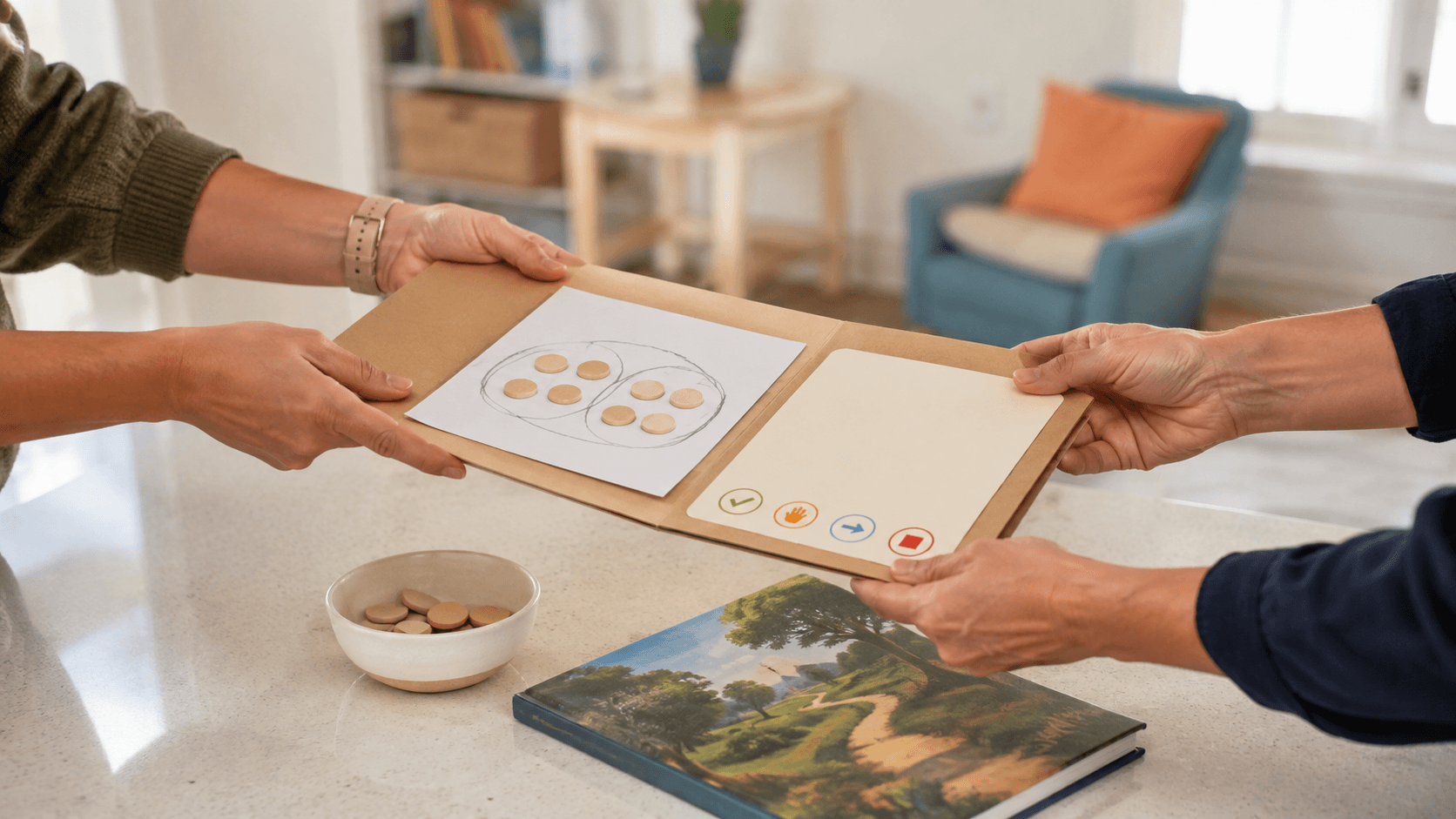
Sharing the learning day
A practical homeschool handover note: record what is finished, support used, one next step, and when to stop so the next caregiver can continue calmly.
Read guideContinue exploring
Jump into the topic that best fits your current learning decision.
Continue exploring
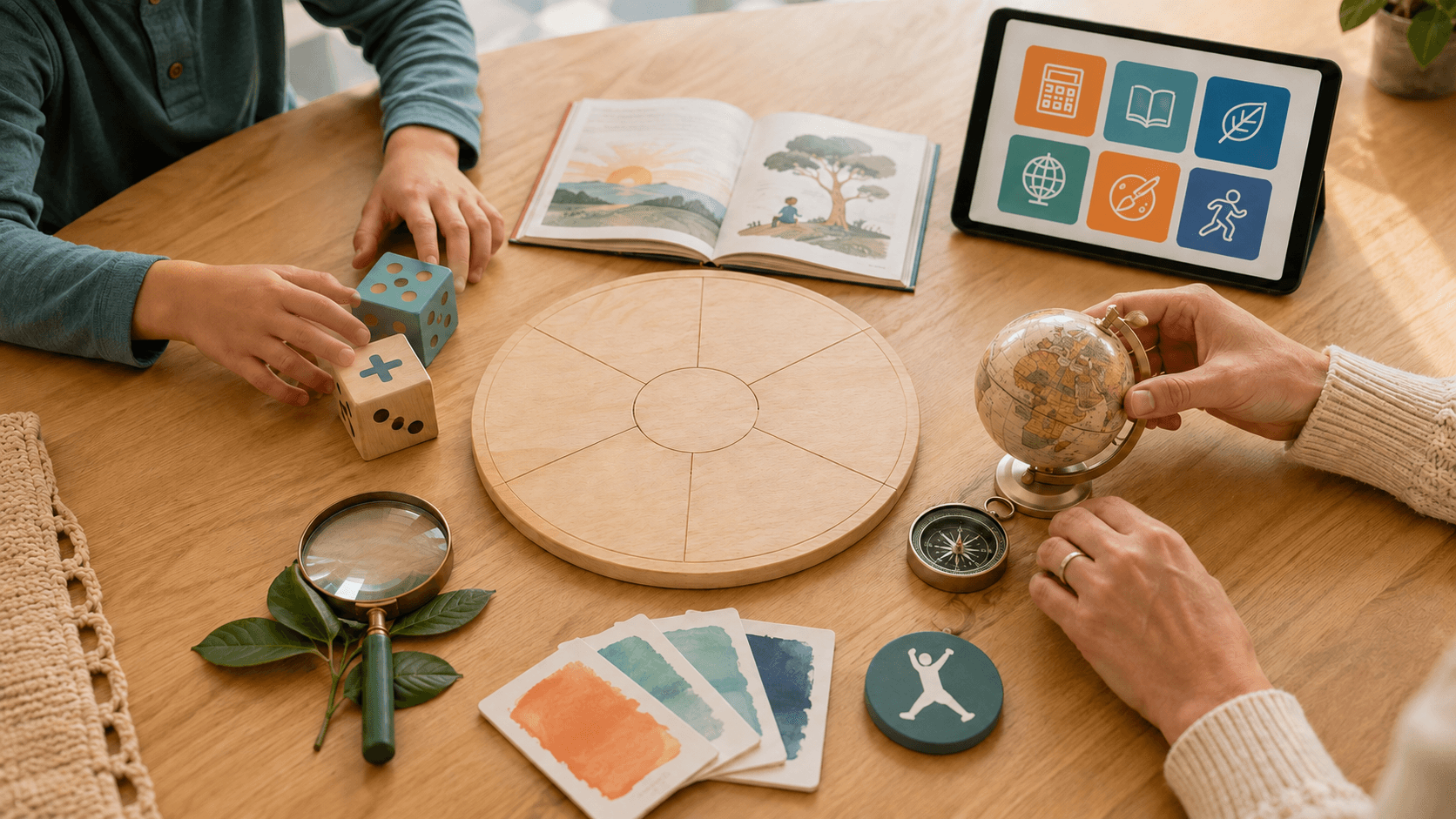
A monthly coverage check, not another timetable
Review six learning domains once a month to spot homeschool curriculum gaps without turning every day into a rigid timetable.
Read guide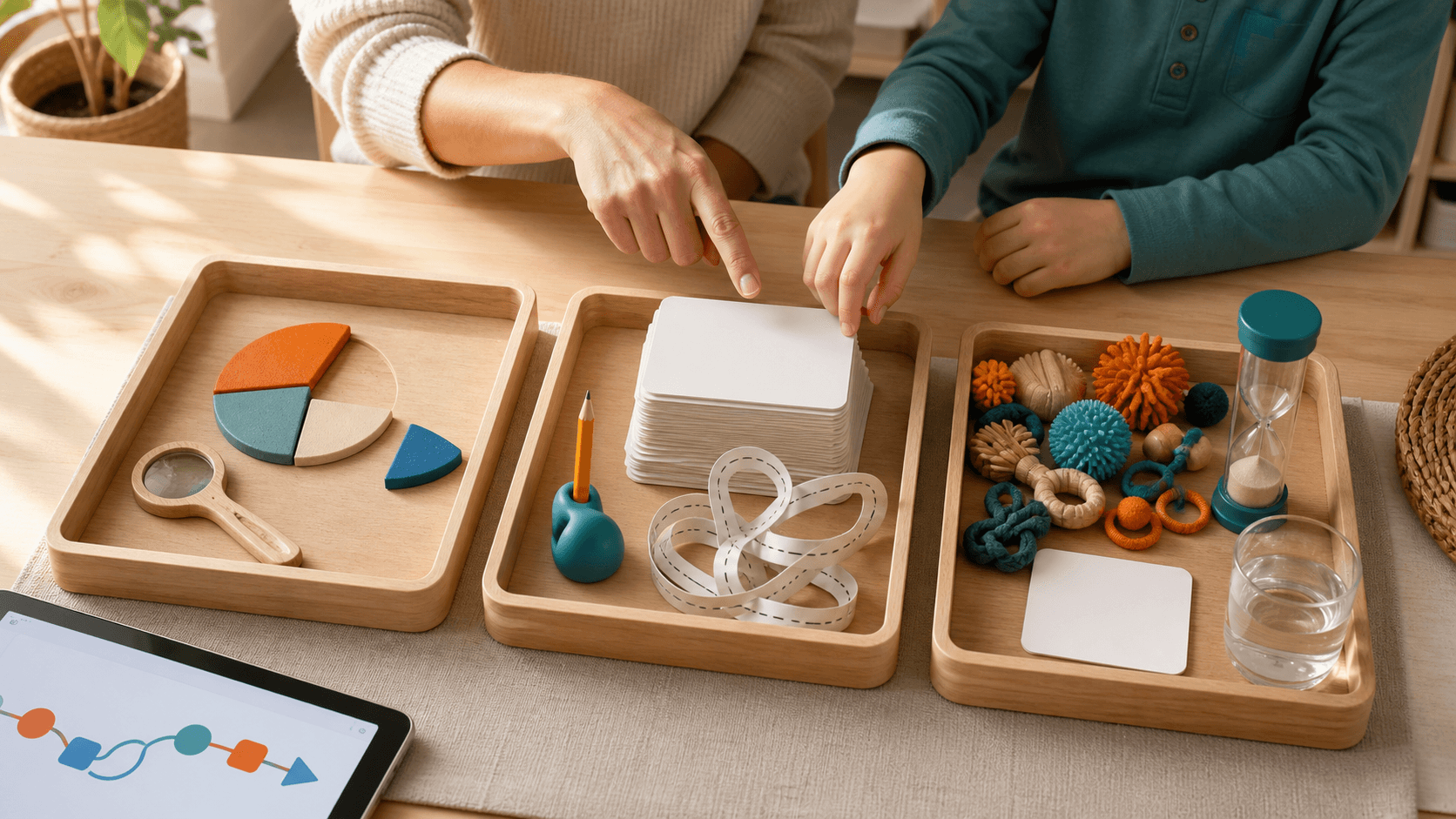
Find the reason before changing the plan
Use three quick checks—knowledge gap, task friction, or overload—to choose a calmer next step when homeschool learning stalls.
Read guide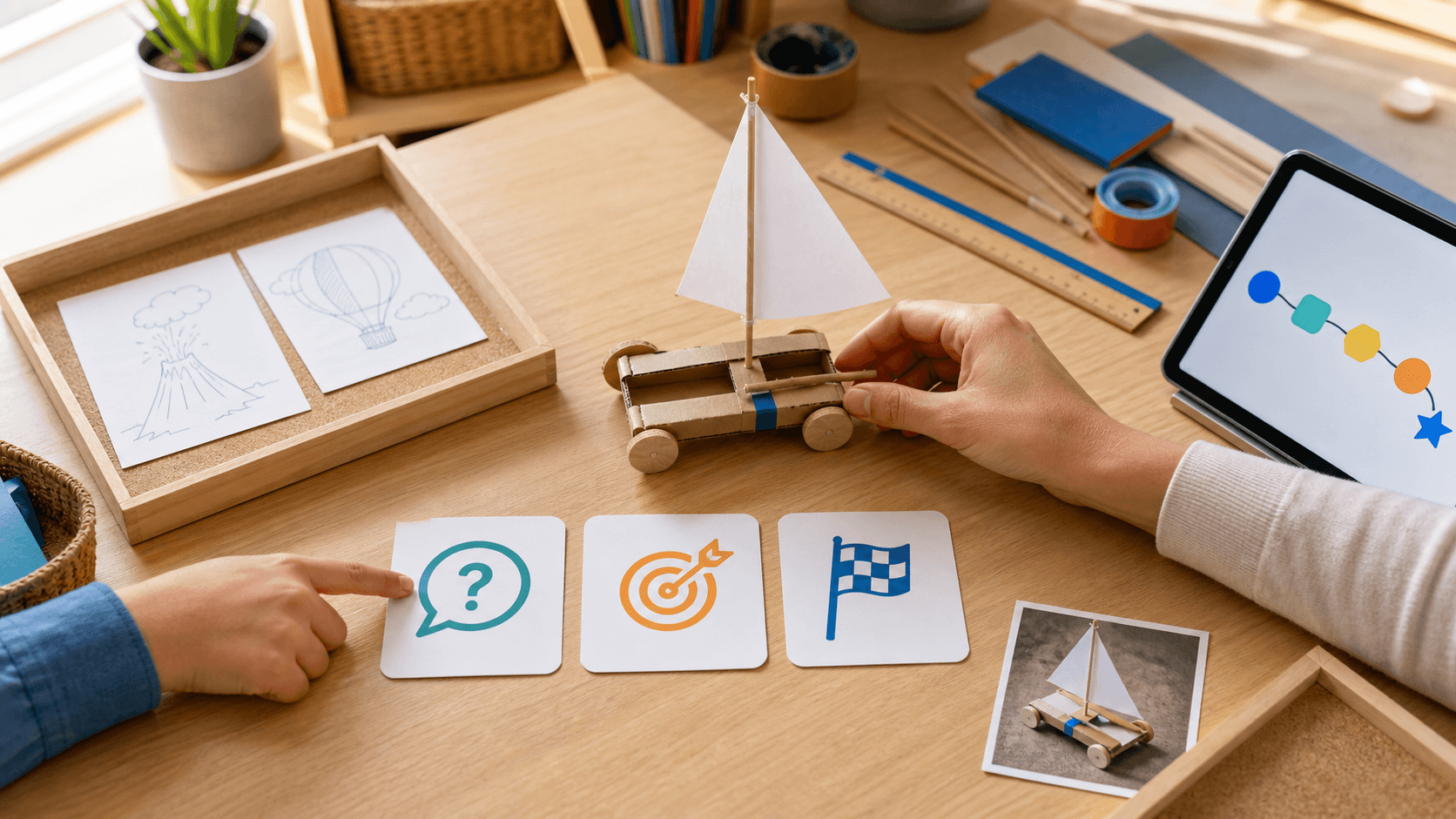
Finish projects without flattening curiosity
Use one question, one skill target, and one finish line to keep project-based homeschooling creative without collecting unfinished work or extra parent workload.
Read guide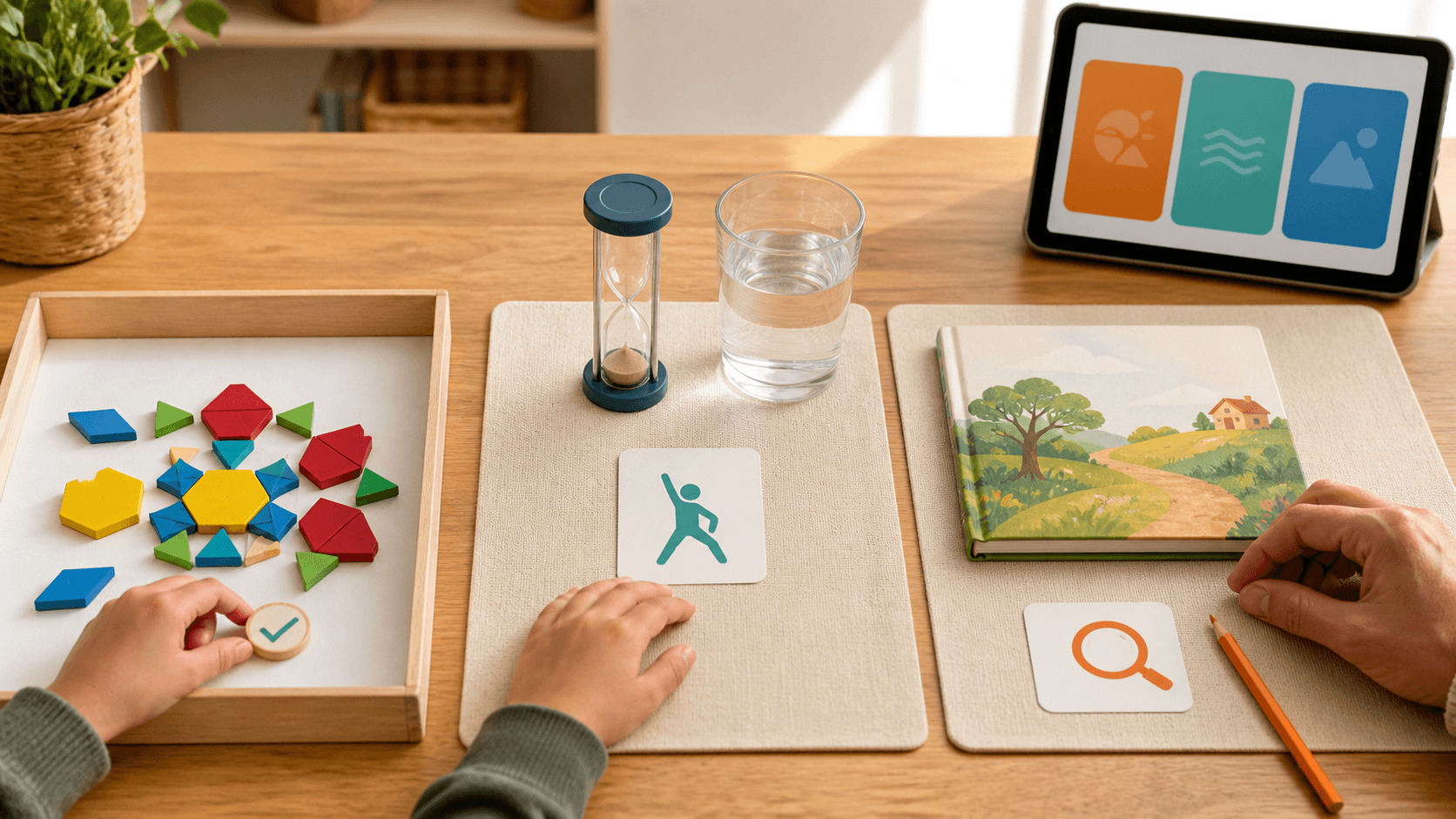
A calmer bridge between subjects
Use a close, reset, preview routine to make homeschool subject changes calmer, more predictable, and easier to review for mixed-pace learners.
Read guide
Fact-checking AI learning
A practical claim, source, and explain-back routine for homeschooling and worldschooling parents who want useful AI support without treating every answer as fact.
Read guide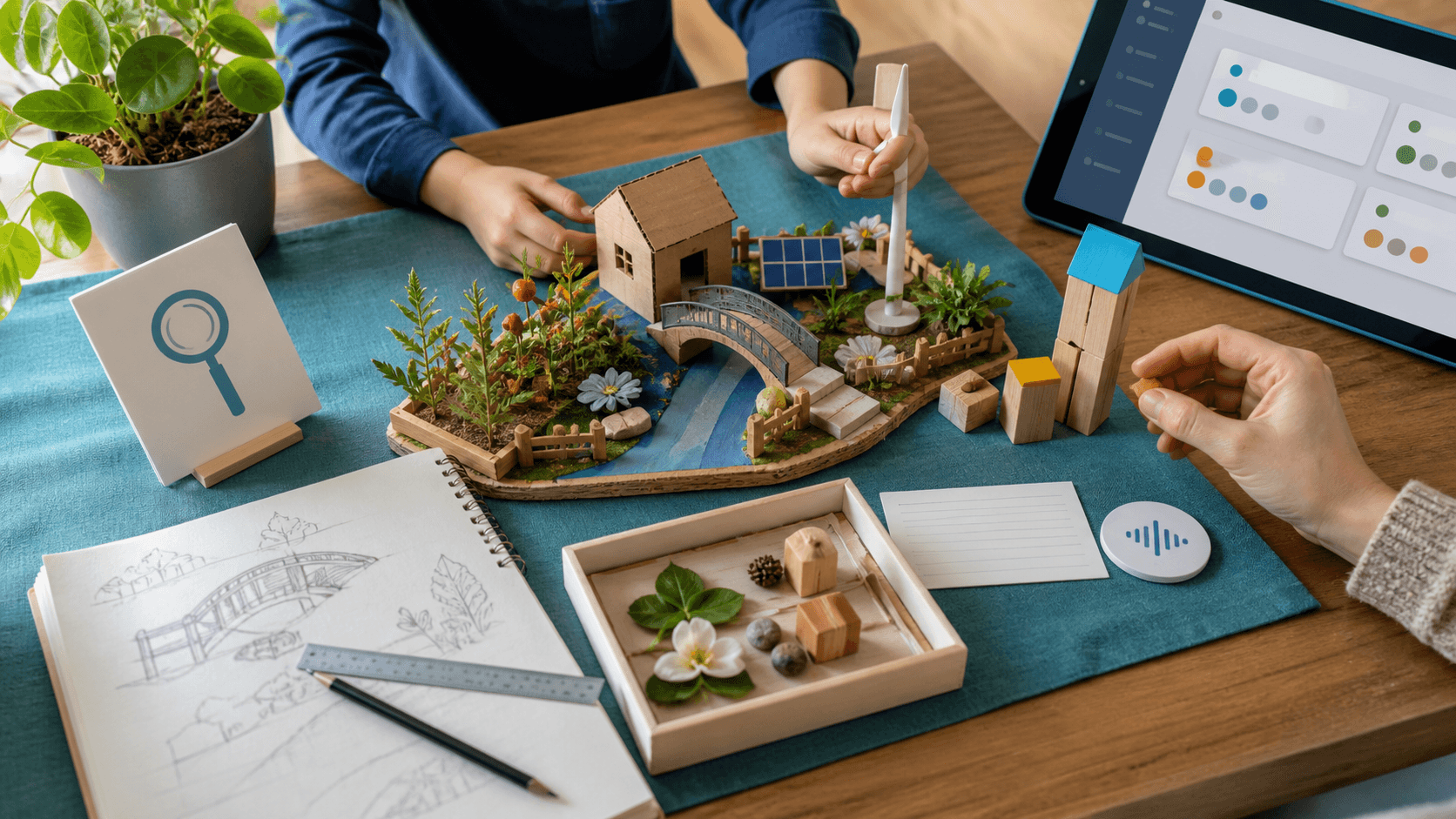
Make project learning visible
Use a four-part evidence chain—question, process, subject proof, reflection—to show what a child learned without turning a homeschool project into extra paperwork.
Read guide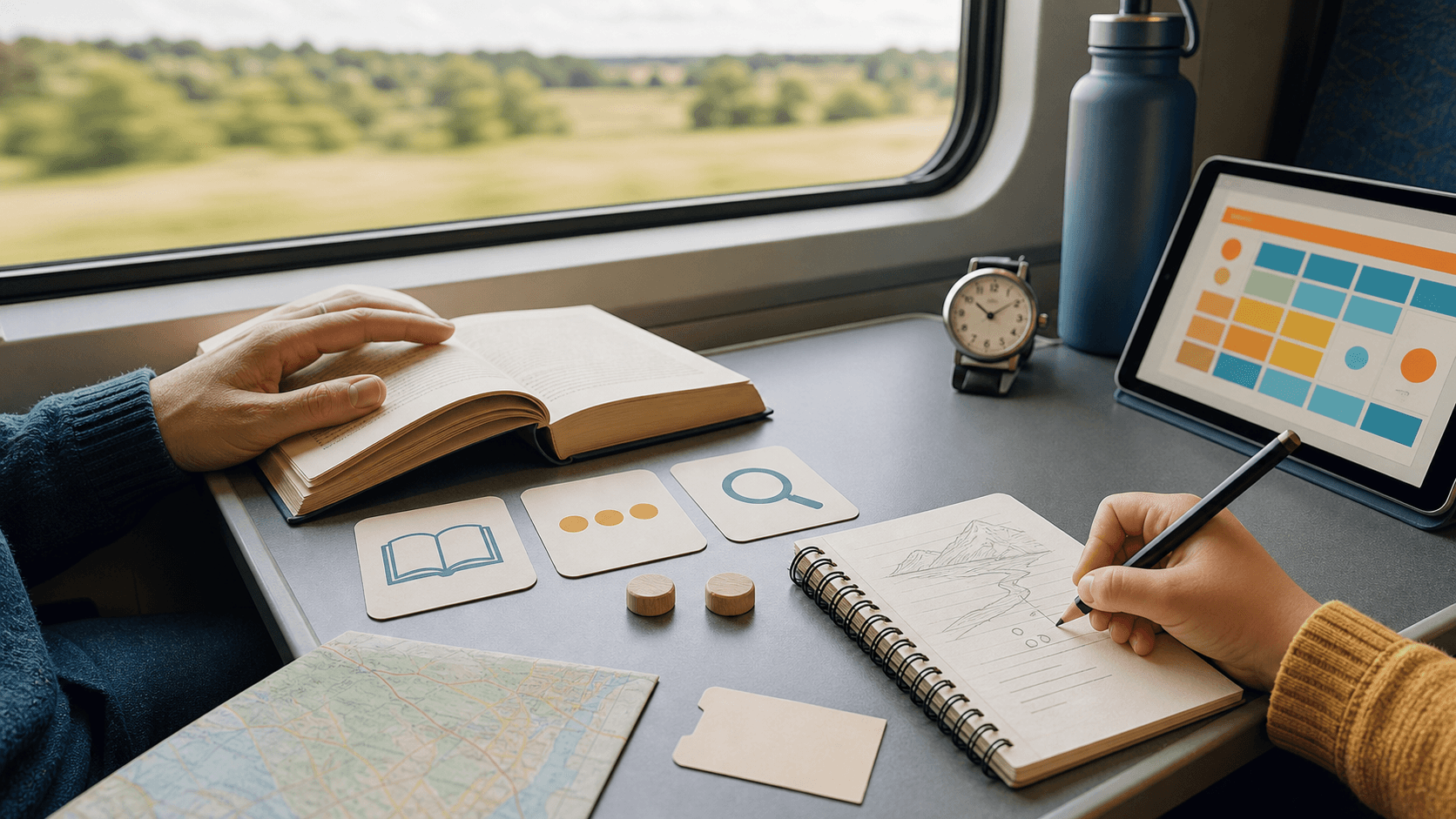
Learning that fits the journey
Use three portable learning anchors—read, count, observe—to keep a travel day educational without turning the train, airport, or car into a classroom.
Read guide
A reset, not a restart
A practical three-choice homeschool reset for overloaded weeks: keep one core priority, move one useful project, drop one task, and preserve visible learning.
Read guide
Curiosity with a clear learning map
A practical two-lane plan for interest-led homeschooling: follow a child's real curiosity while keeping math, reading, writing, review, and evidence visible.
Read guide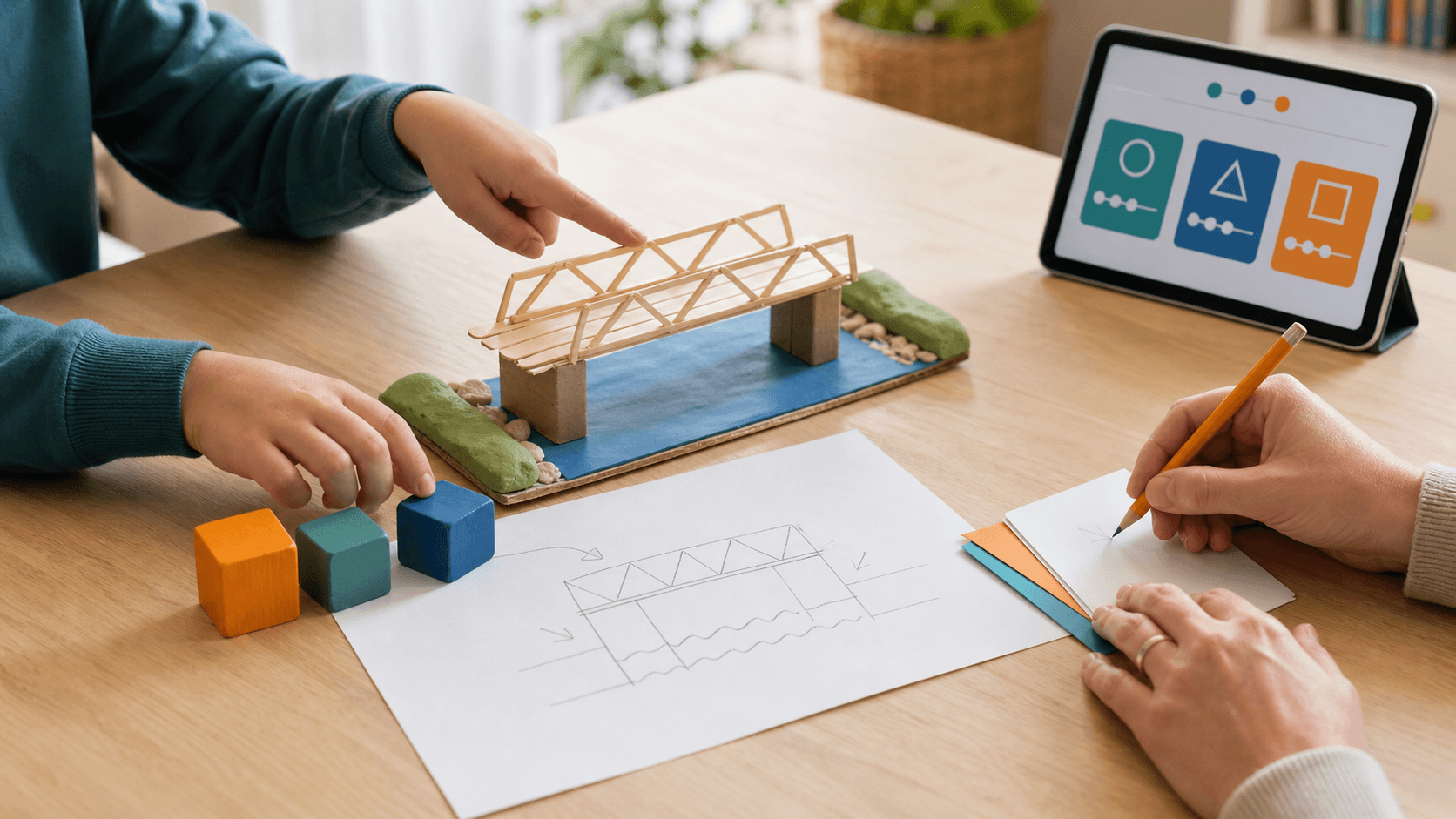
Learning evidence beyond handwriting
A practical homeschooling evidence bridge for children whose spoken understanding is ahead of handwriting: explain, show, capture one note, then build written output.
Read guide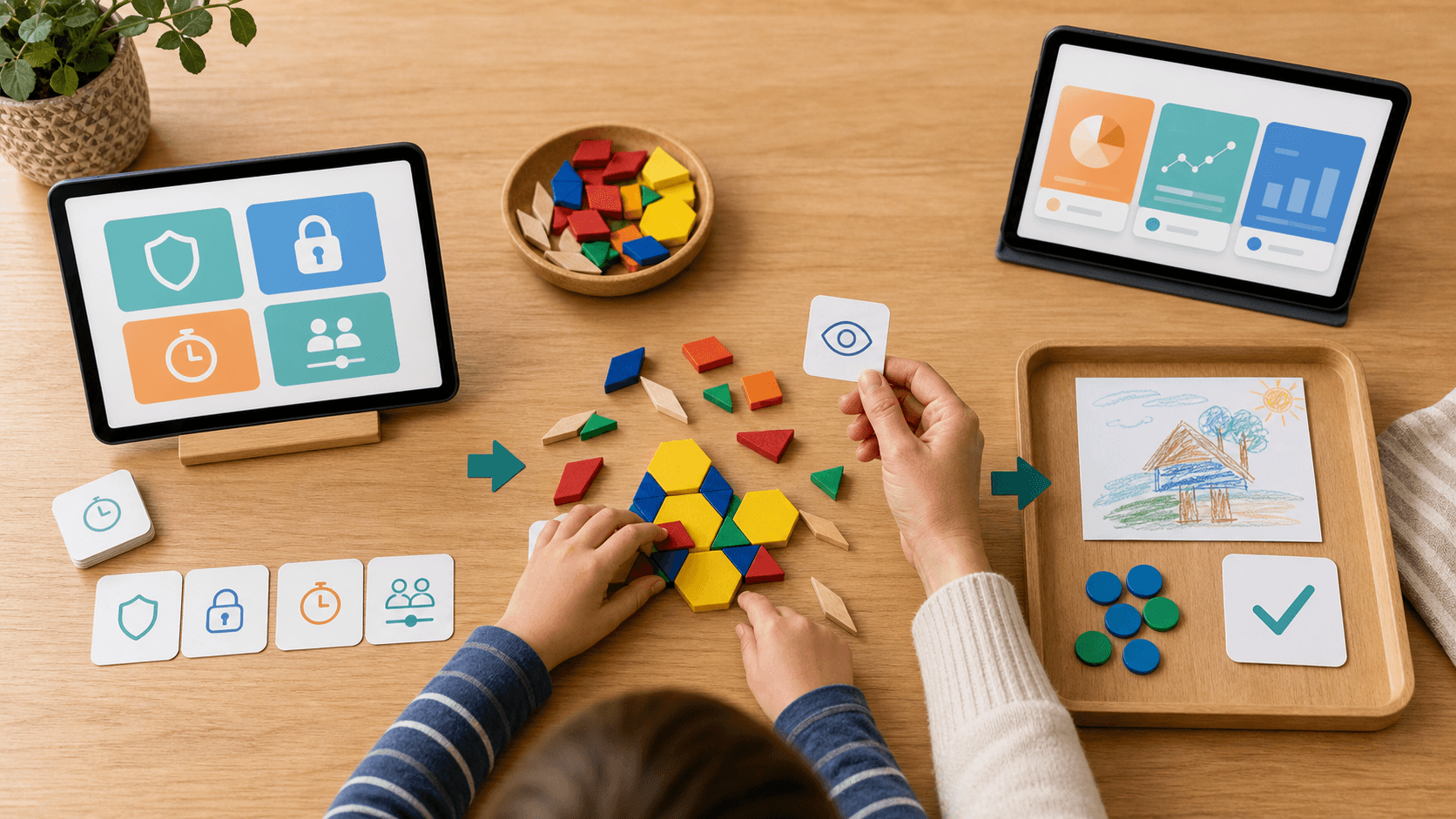
Parent review for AI learning
A practical before, during, and after review rhythm for parents using AI in homeschooling or worldschooling—without reading every child interaction.
Read guide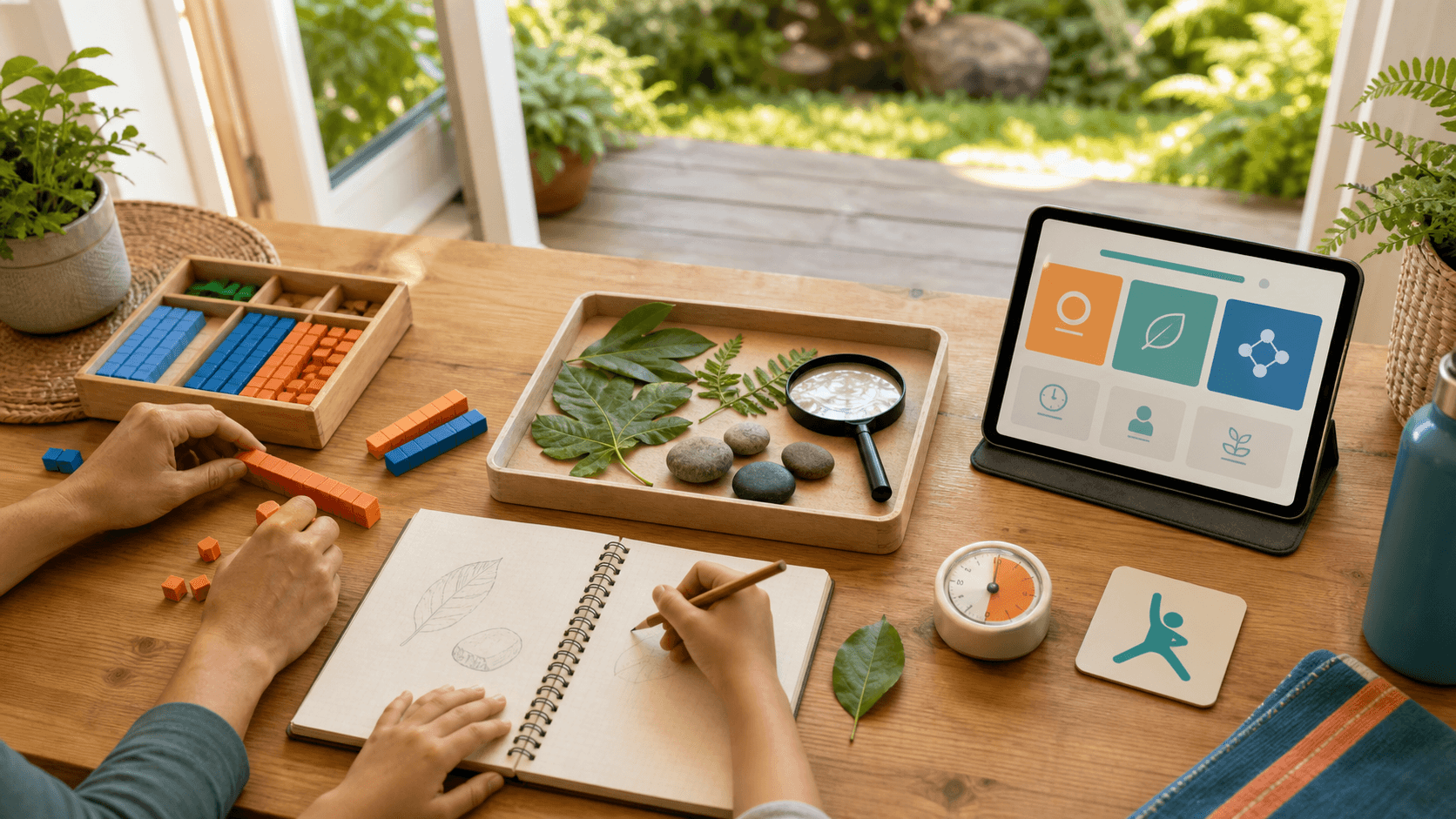
AI learning and screen time
A practical screen-time quality test for homeschooling and worldschooling parents: purpose, active thinking, off-screen transfer, and a clear stopping point.
Read guide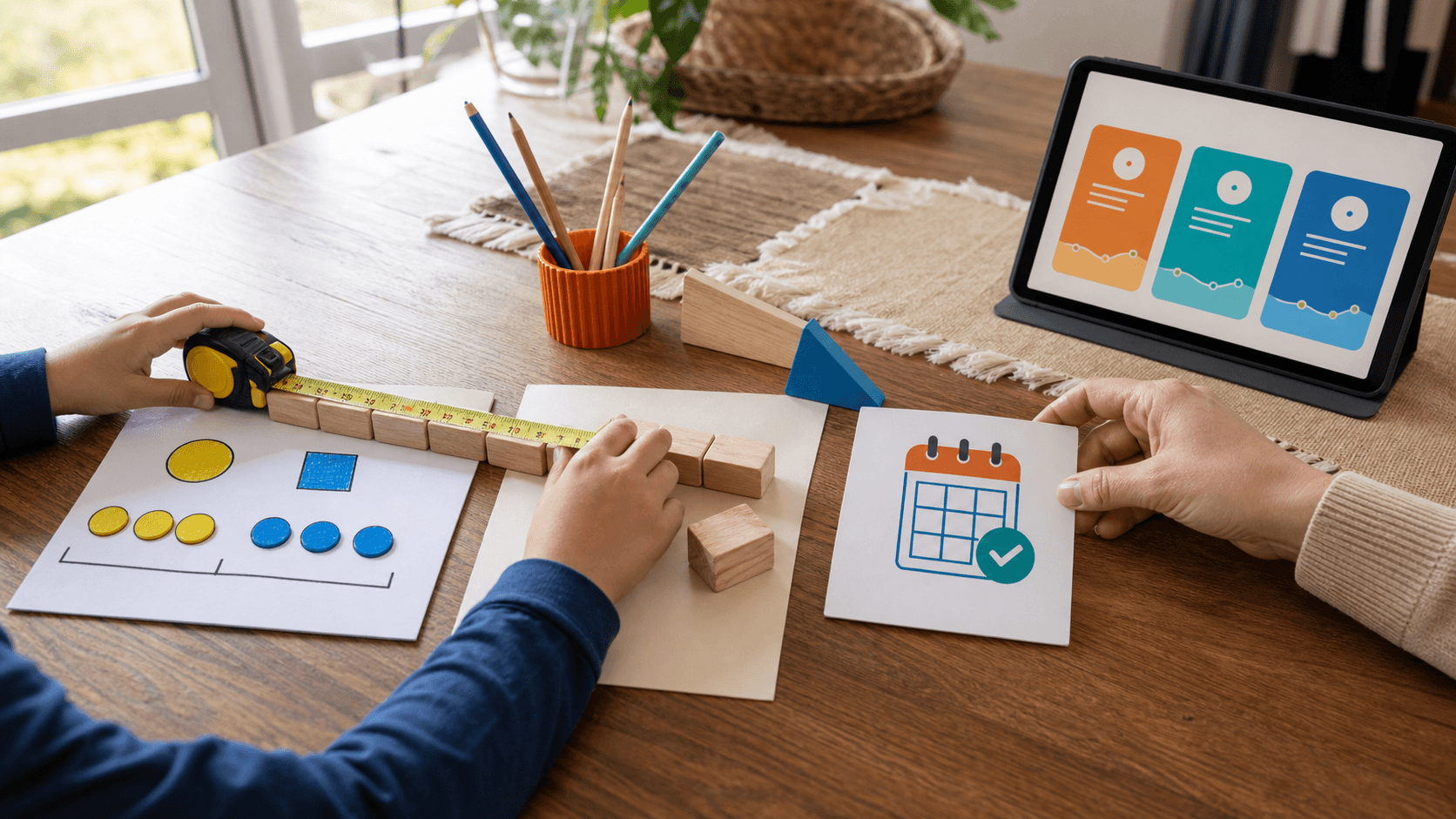
Mastery-based primary learning
A practical three-proof mastery check for homeschooling and worldschooling parents: explain it, apply it, and recall it later before moving on.
Read guide
Homeschooling with work
A practical guide for working, expat, and digital-nomad parents who need finite learning blocks, parent review, portfolio proof, and a calmer SchoolQuest AI week.
Read guide
Portfolio without overwork
A practical parent guide to weekly portfolio evidence for homeschooling and worldschooling: three proof moments, one review note, and a calmer SchoolQuest AI rhythm.
Read guide
Adaptive learning
A parent guide to choosing adaptive mastery loops, review, portfolio evidence, and calmer SchoolQuest AI rhythm instead of endless printable worksheets.
Read guide
Language balance
How parents can protect home language, local language, and English without turning every day into three separate school days.
Read guide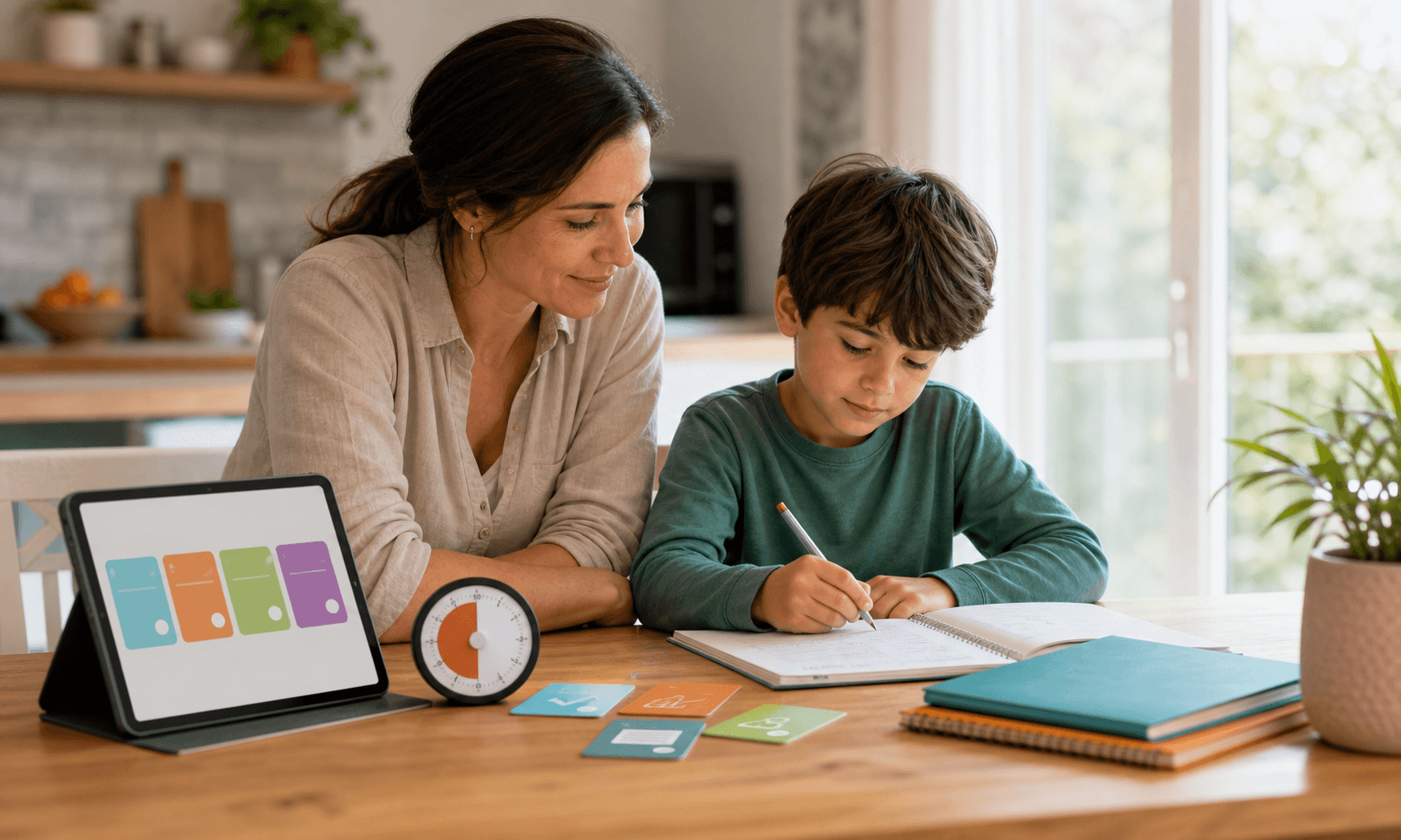
Calm daily rhythm
A practical parent guide to short learning rounds, clear stop rules, adaptive review, and portfolio proof without turning every day into school-at-home conflict.
Read guide
Worldschooling planning
A parent guide to local geography, holidays, civics, language, everyday life, and portfolio records for families learning across countries.
Read guide
Family learning pods
A practical guide for homeschooling and worldschooling parents who want shared learning, individual mastery, portfolio evidence, and calmer AI-supported coordination.
Read guide
Little AI Minds Universe
A practical parent guide to the two-app family path: SchoolQuest AI for weekly rhythm, mastery, and records; Little AI Minds for creative AI projects after core learning.
Read guide
Twice-exceptional learners
Twice-exceptional children can need advanced challenge and support for ADHD, autism, sensory load, writing friction, transitions, recovery, and uneven learning paces at the same time.
Read guide
Gifted learners
Gifted, high-IQ, ADHD, autistic, and uneven learners often need more than acceleration: mastery checks, transfer, review, and an adjustable pace that fits the child.
Read guide
Predictable learning
Autistic, ADHD, gifted/high-IQ, and sensory-sensitive learners often do best when the learning path is visible, the pace can adjust, and high expectations are paired with calmer transitions.
Read guide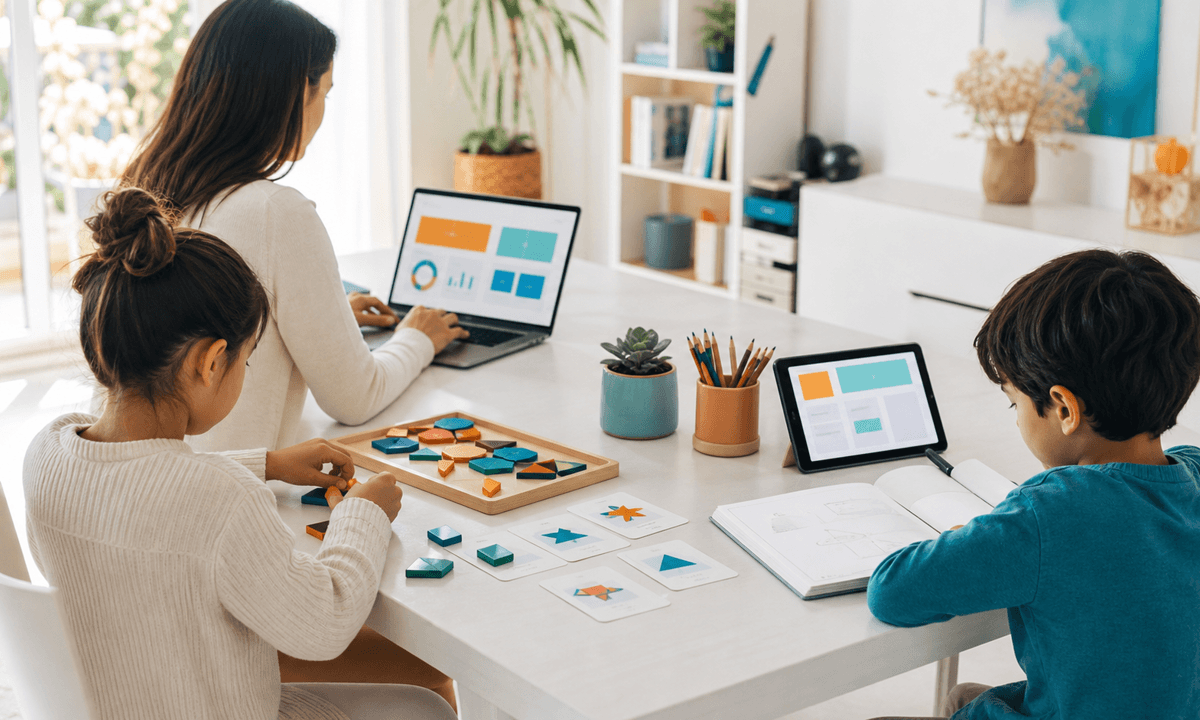
Mixed-pace families
Homeschooling and worldschooling families often need one calm system for gifted/high-IQ, ADHD, autistic, and mixed-pace children: shared rhythm, individual tasks, and visible mastery.
Read guide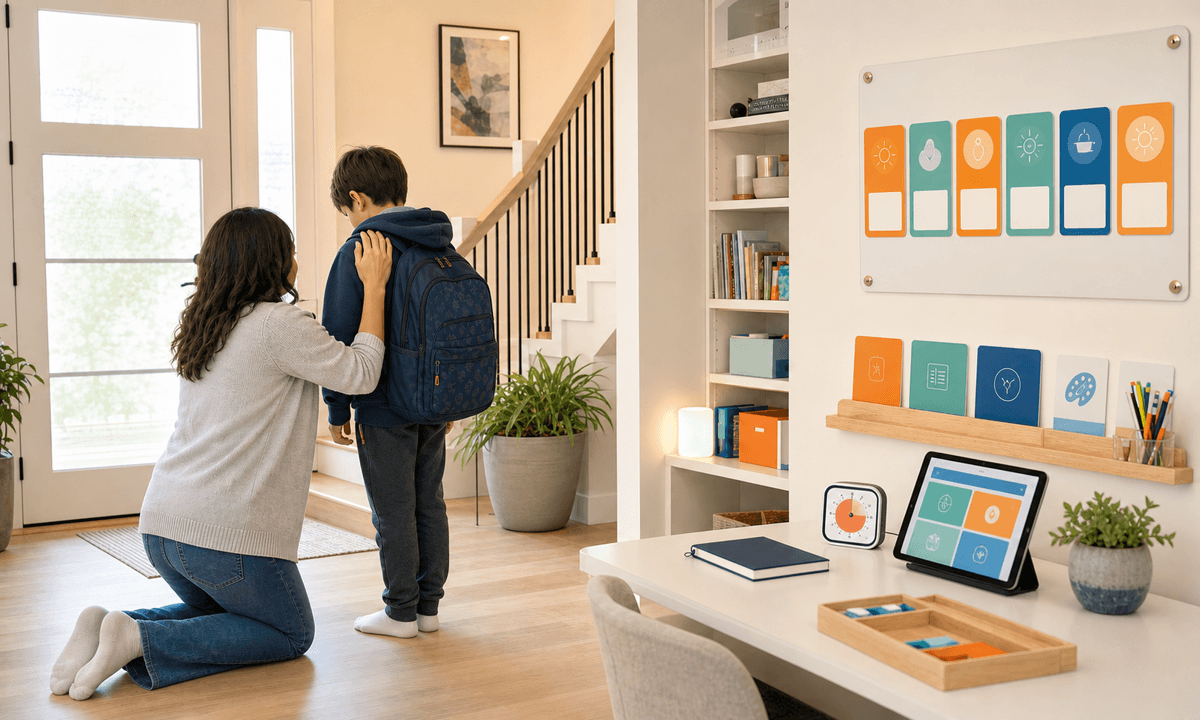
School mismatch reset
A practical reset for gifted/high-IQ, ADHD, autistic, anxious, or bored learners after a stressful school fit: stabilize rhythm, rebuild confidence, and collect gentle evidence.
Read guide
Safe science at home
A calmer way to teach primary science at home: observe, compare, record, explain, and connect evidence without flames, chemicals, or parent overwhelm.
Read guide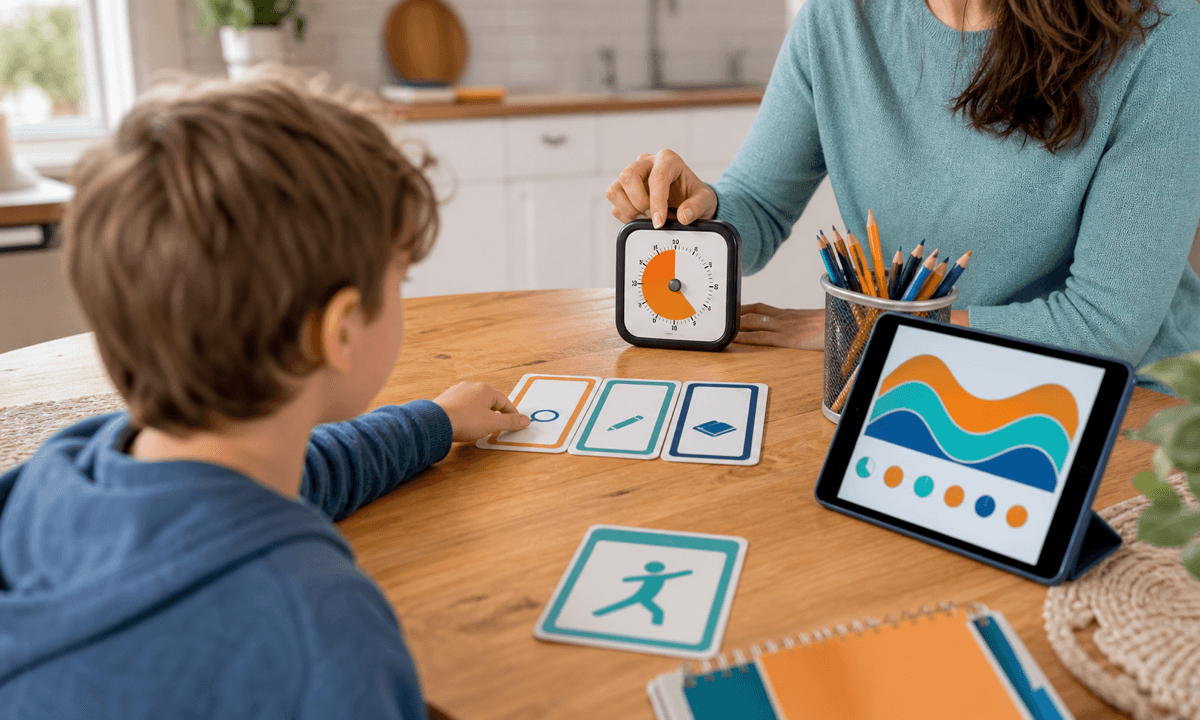
Short learning loops
For ADHD, autistic, and other neurodivergent children, progress often comes from clear starts, quick feedback, movement, and a visible next step instead of long seat-time.
Read guide
Worldschooling records
A practical record rhythm for digital nomads and expat families: skills, projects, photos, reflections, and subject balance without turning travel into paperwork.
Read guide
Start here
The first version should be a calm learning loop, not a giant LMS.
Read guide
Curriculum map
Core academics matter, but a complete family learning system also needs world context, science, projects, media literacy, financial literacy, and wellbeing.
Read guide
First week
How to combine core academics, interest projects, world context, science, and portfolio evidence without overloading the family.
Read guide
For mismatched learners
A practical lens for high-IQ, gifted, sensitive, ADHD, autistic, anxious, or deeply bored learners.
Read guide
Portable education
How to keep continuity when language, country, school calendar, and community keep changing.
Read guide
Mastery over hours
A mastery-based approach can make learning shorter, deeper, and kinder for gifted, high-IQ, neurodivergent, fast, slow, and uneven learners.
Read guide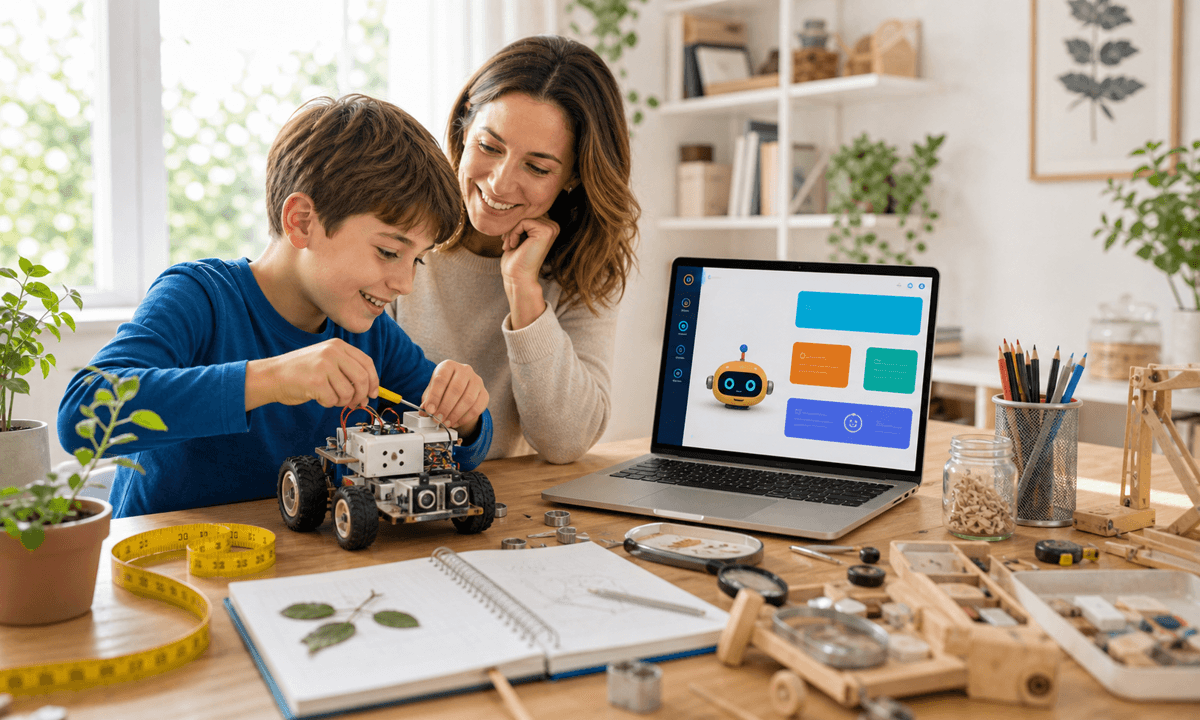
Life as curriculum
For alternative communities, early-retirement parents, and families who want learning to touch the real world.
Read guide
Evidence without panic
Sessions, projects, uploads, reflections, and mastery signals can become a calm record of progress.
Read guide
Balanced evidence
A practical map for documenting academics, world context, science inquiry, creative projects, and life readiness without drowning in paperwork.
Read guide
Trust and AI
A safe tutor should protect confidence, avoid answer-giving, and adapt without labeling the child.
Read guideGuides in this topic