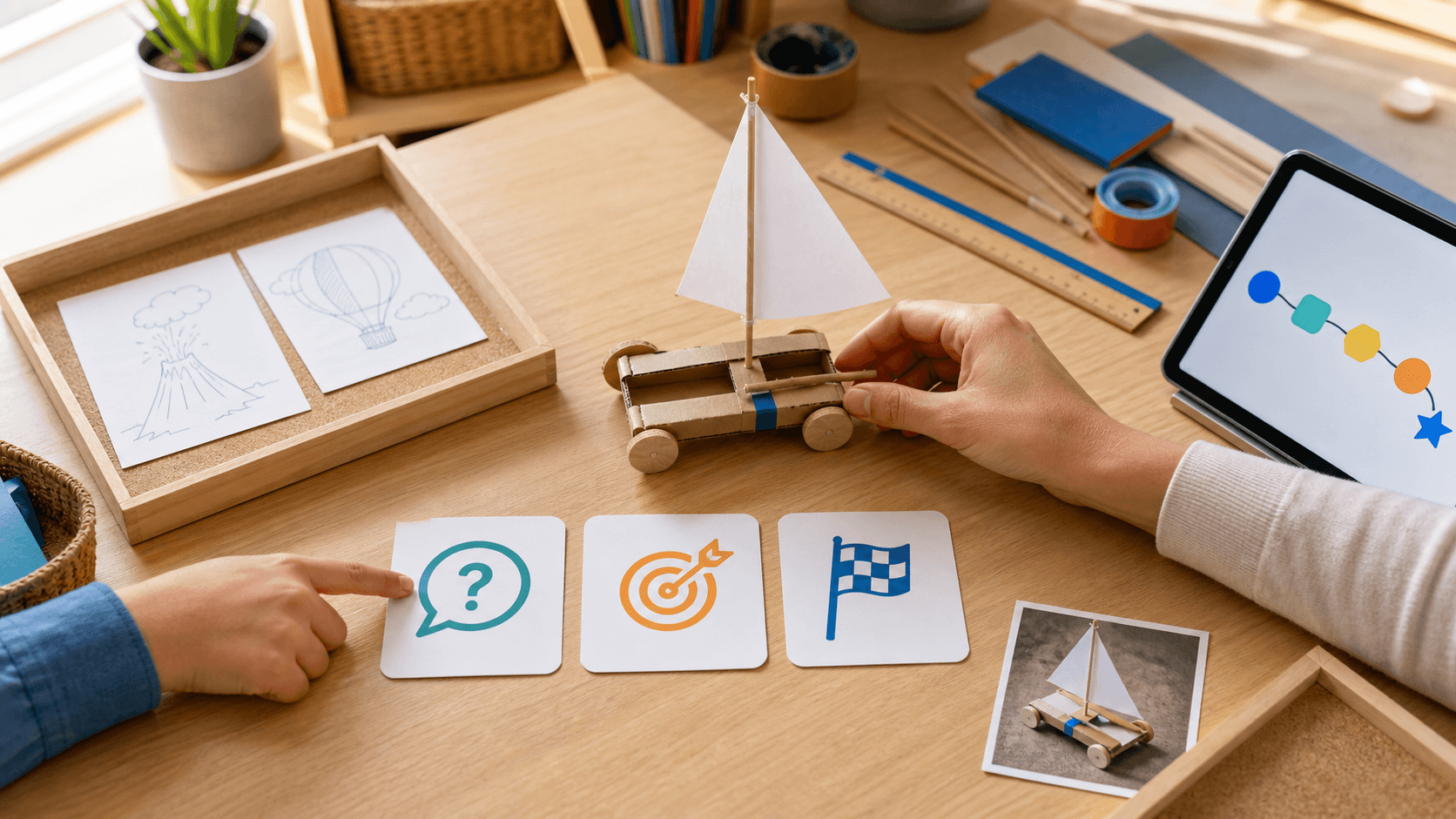
Some children do not fit the usual labels. They may reason years ahead in science, mathematics, stories, maps, animals, coding, or chemistry, while still finding handwriting, transitions, executive function, sensory load, social fatigue, or long seat-time unexpectedly hard.
This is often called twice-exceptional, or 2e: high ability alongside a support need. It can include gifted/high-IQ learners with ADHD, autistic learners with deep specialist interests, children who understand advanced ideas but avoid writing, and children whose learning pace changes sharply from one subject to another.
For homeschooling and worldschooling families, this matters because a standard worksheet pace can miss both sides of the child. Too easy, and the child disengages. Too vague, too long, or too sensory-heavy, and the same child may look resistant even when the ability is there.
A useful learning system should hold two truths at once: the child deserves real challenge, and the child deserves a pathway that respects attention, energy, communication style, transitions, and recovery. Support should not mean lower expectations. Challenge should not mean ignoring the nervous system.
SchoolQuest AI can support this by separating mastery from speed, and effort from friction. The learning loop can ask: does this child need deeper challenge, a smaller writing scaffold, a visual next step, a movement break, an interest-based example, a calmer review, or a different way to show understanding?
The parent view also matters. Parents need to see patterns over time: which subjects are ahead, which skills are fragile, when errors look conceptual, when they look like overload, and which forms of proof belong in the portfolio. That is especially important for families moving between countries or building a serious homeschooling record.
SchoolQuest AI is part of the Little AI Minds Universe, so the long-term idea is not only faster academics. It is a calmer learning world where Sparky and the AI Kids Crew can help children feel accompanied while parents keep a serious, structured Grade 1-6 learning path.
This is not a diagnosis, therapy plan, or guarantee. It is a design principle: a child can be brilliant and need support. A serious AI learning platform should be honest enough to serve both.
Next decision
Turn a guide into a concrete family step
Choose the next route based on what you are deciding now: a first calm week, complete Grade 1-6 coverage, family fit before you create an account, or phone/tablet use for gifted/high-IQ, ADHD, autistic, 2e, and mixed-pace learners.
Start with one calm week
Use the starter guide when your family needs a practical rhythm for attention, confidence, sensory load, and different learning paces before changing everything.
Open starter guideCheck full primary coverage
Open the program map when you need to see how math, reading, writing, science, geography, projects, life skills, and portfolio evidence fit together.
Open program mapUse both apps as one family path
Use SchoolQuest AI for weekly rhythm, mastery checks, records, and parent review. Add Little AI Minds when core learning is done and a bigger creative AI project makes sense.
See the family bundle pathDecide whether SchoolQuest fits now
Review the fit signals families should understand before joining: High-IQ, ADHD, autism, 2e, mixed learning styles, boundaries, help rhythm, and what should be clear before any paid access.
Review family fitTry the app surface on devices
Use the install page when you want the learning area and parent view on a phone or tablet while articles, pricing, and legal information stay in the browser.
Open install guideAI Homeschooling Starter Guide
Get the starter guide
Join the guide list and we will use this interest signal to send the right next steps.