Travel days are real days in a worldschooling life, but they are rarely good days for a full timetable. Check-out, transport, queues, noise, unfamiliar food, and tired adults already place demands on the family. A smaller plan protects the journey and keeps learning visible.
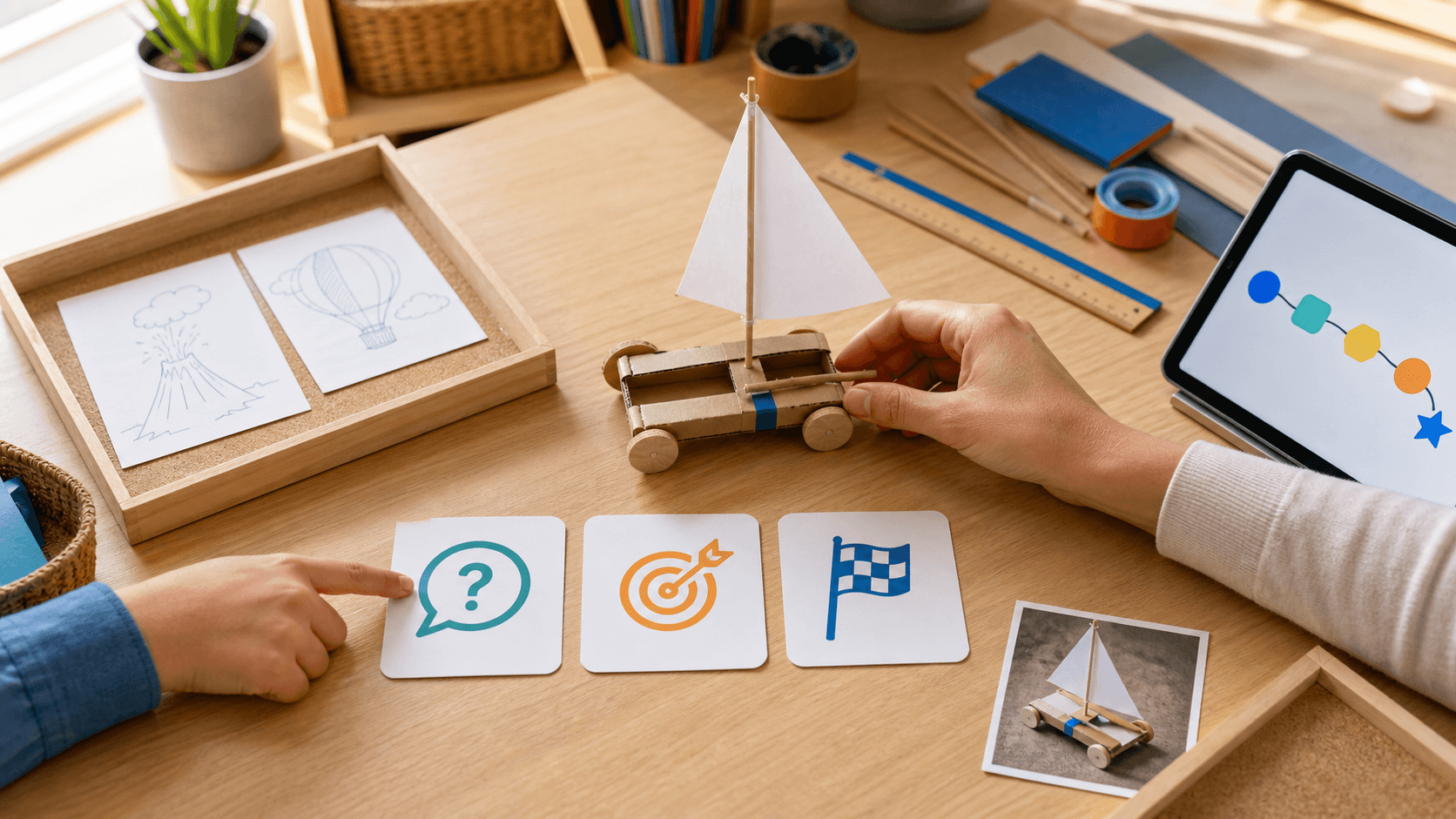
Choose three portable anchors: read, count, and observe. Read one short chapter, sign, menu, or map key. Count time, distance, change, platforms, or a simple travel budget. Observe one detail about landscape, language, weather, transport, or local life and capture it in a sketch, photo, voice note, or sentence.
Set the finish line before leaving: one activity from each anchor, or only two when the day is demanding. Ten focused minutes can be enough. Do not carry unfinished tasks into the hotel as travel-day debt. The goal is continuity, not a classroom recreated in a moving vehicle.
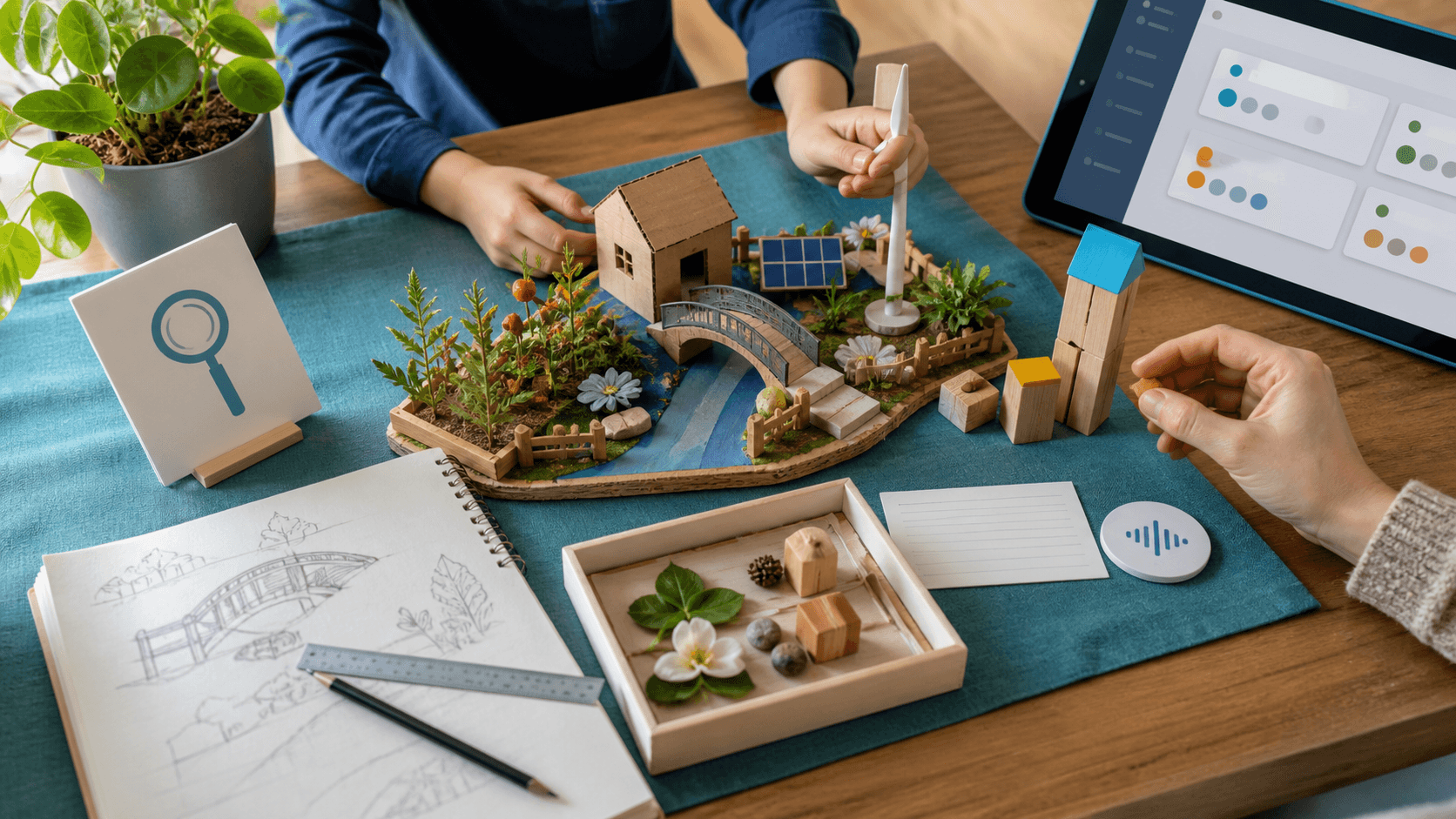
Keep one light proof. A dated field-note page, a route estimate, a map annotation, an oral explanation recorded by a parent, or one photo with a short caption can show what the child noticed and understood. That evidence can feed the weekly portfolio without creating more paperwork on arrival.
Adjust the plan to the learner. A gifted or high-IQ child may want a deeper route puzzle instead of more questions. A child with ADHD may need one visible card at a time. An autistic, sensory-sensitive, or twice-exceptional / 2e learner may need the sequence previewed, headphones, a quieter observation task, or permission to finish later. Adjust pace, explanation style, review, sensory load, and challenge. This is learning design, not diagnosis, therapy, or a guaranteed outcome.
SchoolQuest AI is part of the Little AI Minds Universe. SchoolQuest can hold the three anchors, parent review, mastery signals, and travel evidence so the family sees a coherent learning thread across locations instead of a collection of disconnected activities.
If an observation later becomes a travel story, illustrated field guide, audio diary, comic, or creative AI project, the SchoolQuest AI + Little AI Minds family-bundle path gives it a natural next home. SchoolQuest keeps the curriculum thread; Little AI Minds opens the creative studio after the core travel-day loop is complete.
Next decision
Turn a guide into a concrete family step
Choose the next route based on what you are deciding now: a first calm week, complete Grade 1-6 coverage, family fit before you create an account, or phone/tablet use for gifted/high-IQ, ADHD, autistic, 2e, and mixed-pace learners.
Start with one calm week
Use the starter guide when your family needs a practical rhythm for attention, confidence, sensory load, and different learning paces before changing everything.
Open starter guideCheck full primary coverage
Open the program map when you need to see how math, reading, writing, science, geography, projects, life skills, and portfolio evidence fit together.
Open program mapUse both apps as one family path
Use SchoolQuest AI for weekly rhythm, mastery checks, records, and parent review. Add Little AI Minds when core learning is done and a bigger creative AI project makes sense.
See the family bundle pathDecide whether SchoolQuest fits now
Review the fit signals families should understand before joining: High-IQ, ADHD, autism, 2e, mixed learning styles, boundaries, help rhythm, and what should be clear before any paid access.
Review family fitTry the app surface on devices
Use the install page when you want the learning area and parent view on a phone or tablet while articles, pricing, and legal information stay in the browser.
Open install guideAI Homeschooling Starter Guide
Get the starter guide
Join the guide list and we will use this interest signal to send the right next steps.