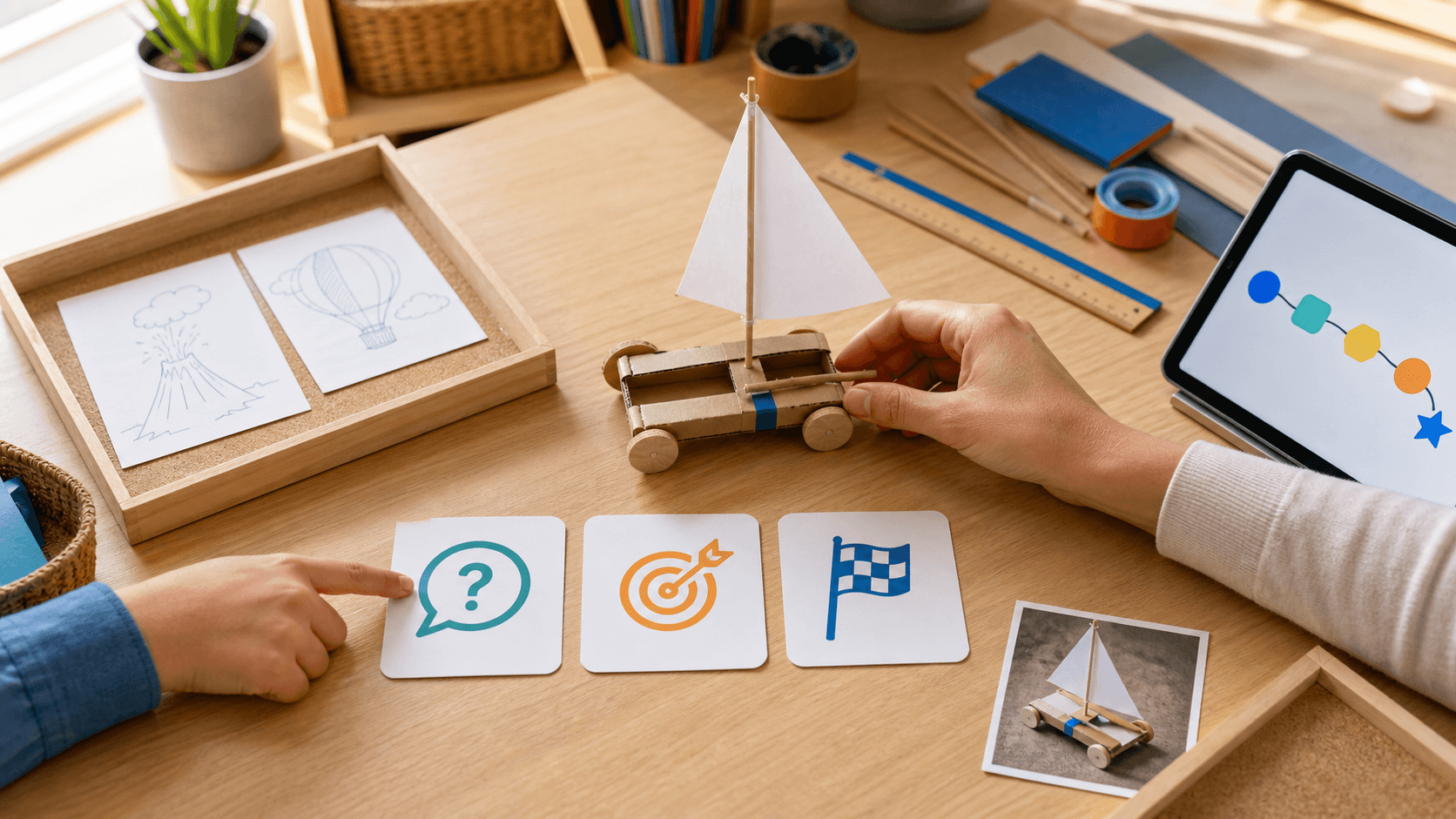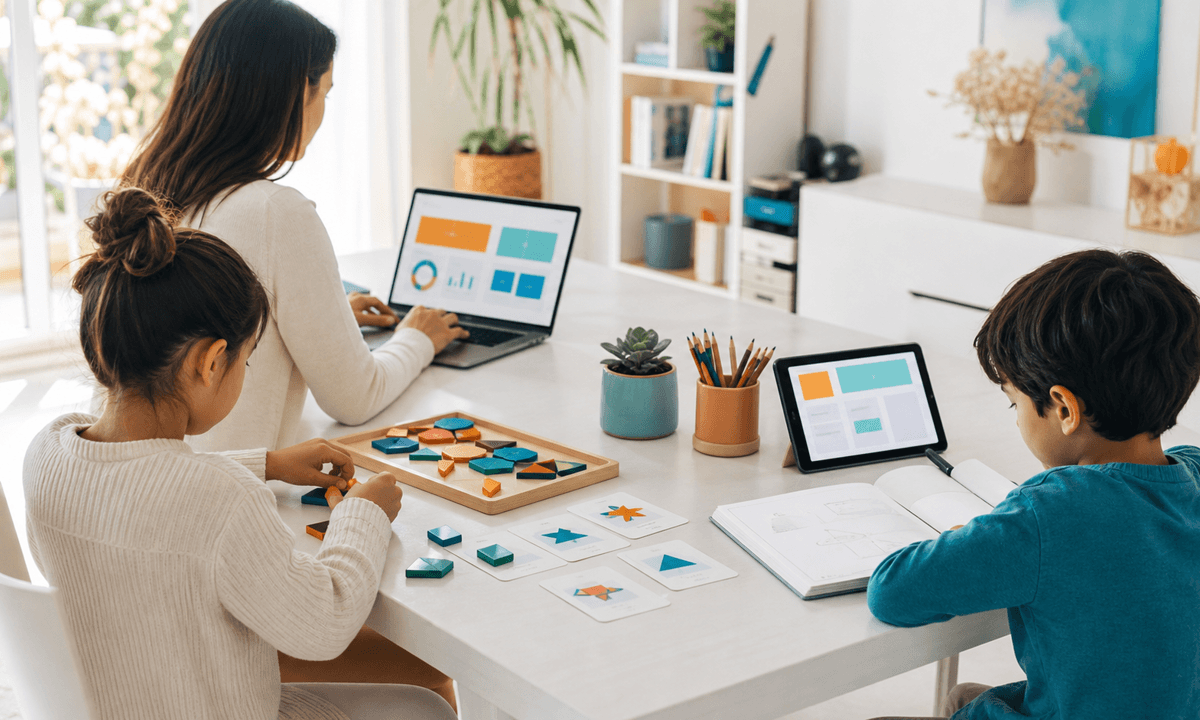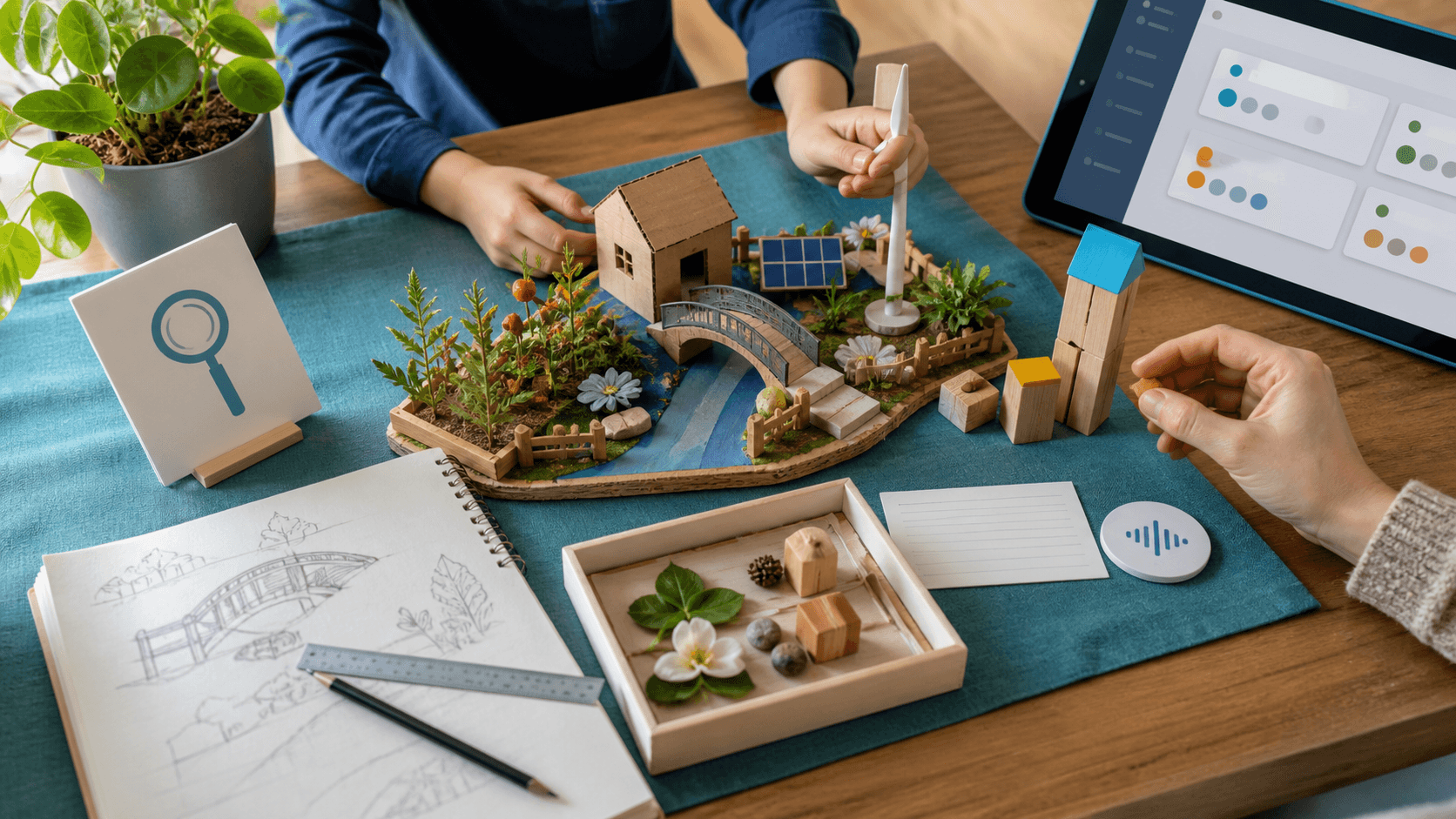
A model bridge, family podcast, garden plan, short film, market budget, or travel field guide can hold serious primary learning. The difficulty for homeschooling and worldschooling parents is not creating more projects. It is seeing which skills the project actually proves.
Use a four-part evidence chain: question, process, subject proof, and reflection. Start with one real question the child wants to answer. Keep one process trace, such as a sketch, photo, calculation, draft, voice note, or changed plan. Then name the clearest subject proof and finish with a short reflection about what worked, changed, or needs another attempt.
Choose one or two subject proofs, not every possible curriculum connection. A bridge model might show measurement and explanatory writing. A family podcast might show research, sequencing, and oral communication. A garden plan might show area, plant science, and observation. Specific evidence is more trustworthy than a long list of subjects added after the fact.
Keep the proof proportionate. One annotated photo, one calculation, and a thirty-second explanation may show more learning than a polished display board. Parents can review the evidence, ask one follow-up question, and save only the strongest trace for the portfolio.
Adjust the evidence format to the learner. A gifted or high-IQ child may need a deeper constraint, comparison, or redesign instead of a larger project. A child with ADHD may benefit from one visible evidence step at a time. An autistic, sensory-sensitive, or twice-exceptional / 2e learner may explain understanding orally, use photos, or work from a predictable sequence. Adjust pace, challenge, sensory load, response format, and review; this is learning design, not diagnosis or therapy.
SchoolQuest AI is part of the Little AI Minds Universe. SchoolQuest can connect the project to the primary program map, keep parent review and mastery signals visible, and store a light portfolio trail without making the project feel like a test.
When the structured project naturally grows into an illustrated story, animation, audio production, game, or broader creative AI experiment, the SchoolQuest AI + Little AI Minds family-bundle path keeps the roles clear: SchoolQuest protects the learning thread, while Little AI Minds opens the creative studio.
Next decision
Turn a guide into a concrete family step
Choose the next route based on what you are deciding now: a first calm week, complete Grade 1-6 coverage, family fit before you create an account, or phone/tablet use for gifted/high-IQ, ADHD, autistic, 2e, and mixed-pace learners.
Start with one calm week
Use the starter guide when your family needs a practical rhythm for attention, confidence, sensory load, and different learning paces before changing everything.
Open starter guideCheck full primary coverage
Open the program map when you need to see how math, reading, writing, science, geography, projects, life skills, and portfolio evidence fit together.
Open program mapUse both apps as one family path
Use SchoolQuest AI for weekly rhythm, mastery checks, records, and parent review. Add Little AI Minds when core learning is done and a bigger creative AI project makes sense.
See the family bundle pathDecide whether SchoolQuest fits now
Review the fit signals families should understand before joining: High-IQ, ADHD, autism, 2e, mixed learning styles, boundaries, help rhythm, and what should be clear before any paid access.
Review family fitTry the app surface on devices
Use the install page when you want the learning area and parent view on a phone or tablet while articles, pricing, and legal information stay in the browser.
Open install guideAI Homeschooling Starter Guide
Get the starter guide
Join the guide list and we will use this interest signal to send the right next steps.