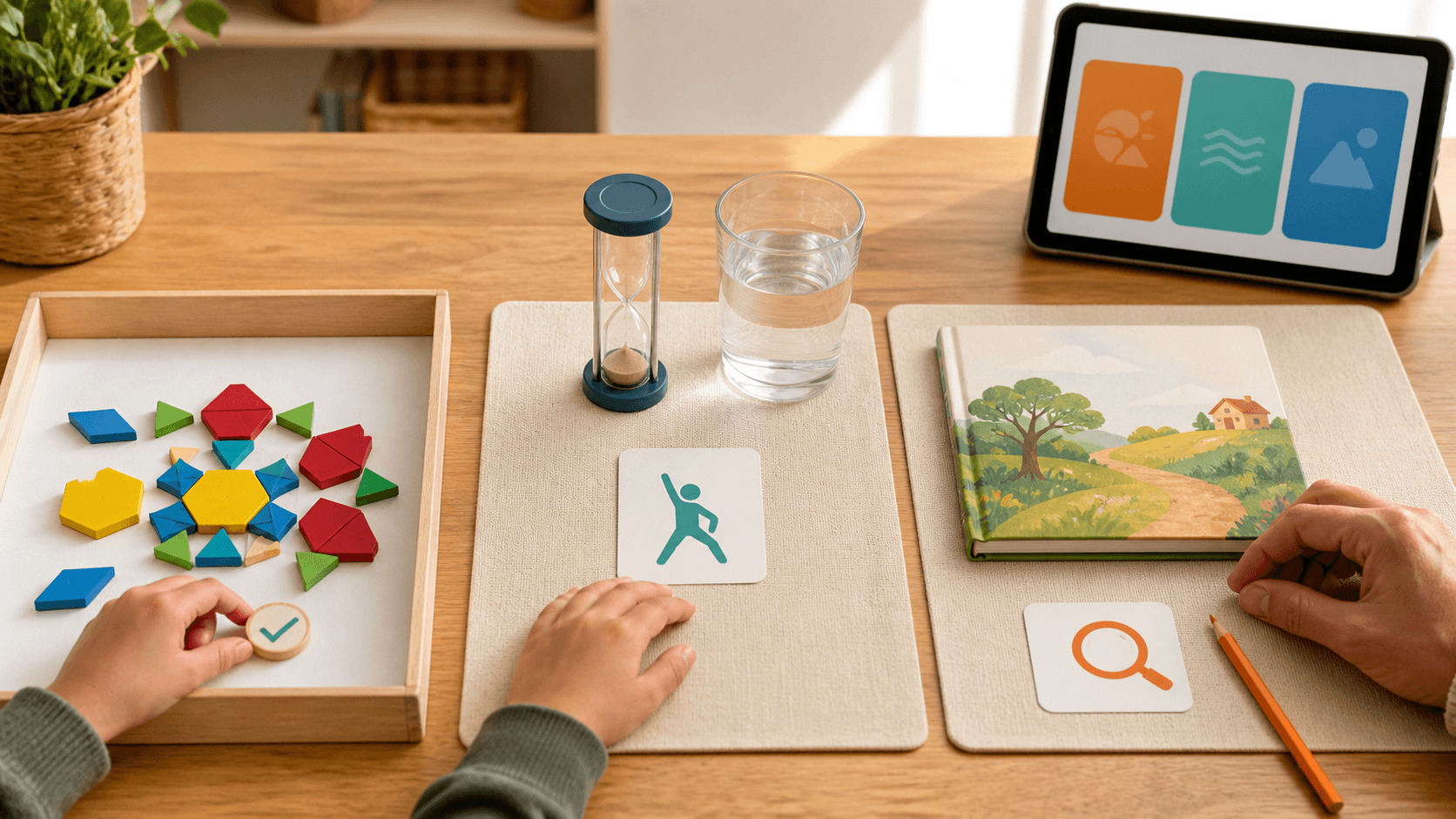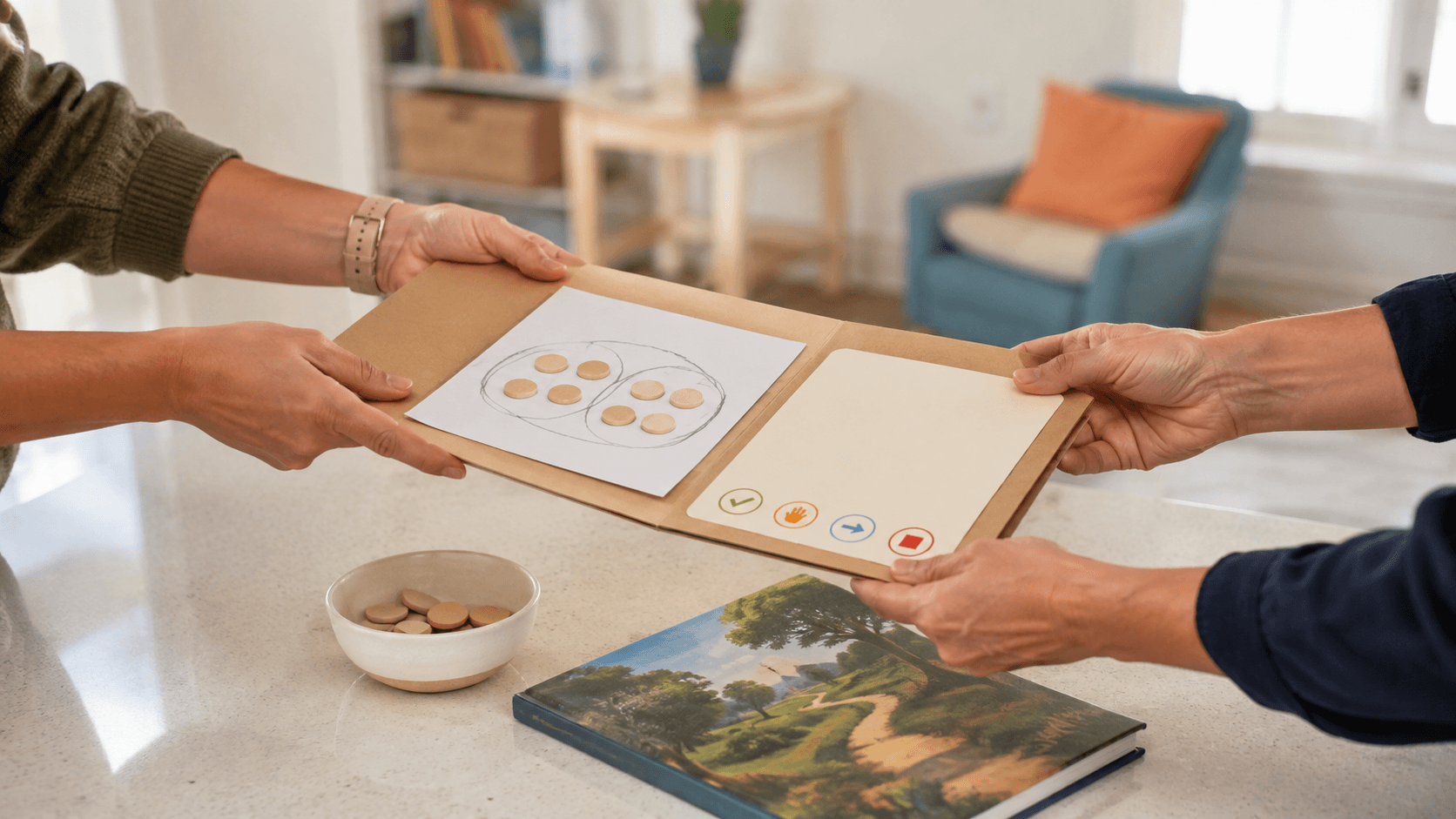
A child has already explored equal groups with one parent. Later, another caregiver sees an unfinished page and starts the lesson again. The child protests; the adult cannot tell whether the idea is understood or the work was abandoned. When homeschooling or worldschooling is shared, this small information gap can turn a useful change of adult into a second school day.
Try a four-line handover in a notebook that stays with the materials. Write the date and learning goal, then record: finished; support used; next step; stop. This is a suggested family routine, not a new app feature or a requirement to document every interaction. The next adult should be able to understand it without asking the child to retell the whole morning.
Finished means one observable action. “Made two equal groups of four counters and explained that both contain the same amount” is more useful than “math done” or “good at division.” Add whether the explanation was independent or prompted. One successful example is a useful observation, not proof that an entire topic is mastered.
Support used describes something the next caregiver can repeat. “Saying the instruction aloud helped; keep the counters available” is actionable. “Was difficult today” is not. Keep the note about the task and the help, without labels about motivation or personality. A gifted learner might need a deeper question while still needing help getting an explanation onto paper.
Next step names one small continuation: “Offer six counters and ask for two equal groups.” Stop sets the boundary: “After one explanation, close the math materials; no extra worksheet today.” If the morning ended in confusion, the next step can instead be a fresh explanation together. If the child is tired, pause and agree when to return. A handover does not oblige anyone to finish an unsuitable task.
Here is the whole note: “Tuesday, equal groups. Finished: two groups of four, explained with one prompt. Support: spoken instruction and counters. Next: share six into two equal groups. Stop: after explaining; leave further practice for the agreed review.” Keep the counters and note together. The next caregiver checks that this is still the current plan before adding work.
For ADHD, autistic, sensory-sensitive, or uneven-pace learners, keep familiar wording, materials, and the stopping point when changing adults. Adjust pace, explanation style, sensory load, review, and challenge to the actual child. These are learning-design choices, not diagnosis, therapy, or guaranteed outcomes. Adults can discuss changes privately rather than negotiating competing plans over the child’s work.
SchoolQuest AI is part of the Little AI Minds Universe. Its structured goals, learning review, and portfolio approach can give families a shared point of reference. Keep this four-line handover alongside the learning materials; this guide does not assume shared caregiver accounts, messaging, or automatic handover features. The Starter Guide is a useful next step for choosing a small first learning block that both adults understand.
At the next handover, ask one practical question: could the incoming caregiver continue from this note without repeating completed work? If not, clarify the missing line. Keep the note only as detailed as the next decision requires, and share it only with the adults responsible for that learning session.
Next decision
Turn a guide into a concrete family step
Choose the next route based on what you are deciding now: a first calm week, complete Grade 1-6 coverage, family fit before you create an account, or phone/tablet use for gifted/high-IQ, ADHD, autistic, 2e, and mixed-pace learners.
Start with one calm week
Use the starter guide when your family needs a practical rhythm for attention, confidence, sensory load, and different learning paces before changing everything.
Open starter guideCheck full primary coverage
Open the program map when you need to see how math, reading, writing, science, geography, projects, life skills, and portfolio evidence fit together.
Open program mapUse both apps as one family path
Use SchoolQuest AI for weekly rhythm, mastery checks, records, and parent review. Add Little AI Minds when core learning is done and a bigger creative AI project makes sense.
See the family bundle pathDecide whether SchoolQuest fits now
Review the fit signals families should understand before joining: High-IQ, ADHD, autism, 2e, mixed learning styles, boundaries, help rhythm, and what should be clear before any paid access.
Review family fitTry the app surface on devices
Use the install page when you want the learning area and parent view on a phone or tablet while articles, pricing, and legal information stay in the browser.
Open install guideAI Homeschooling Starter Guide
Get the starter guide
Join the guide list and we will use this interest signal to send the right next steps.