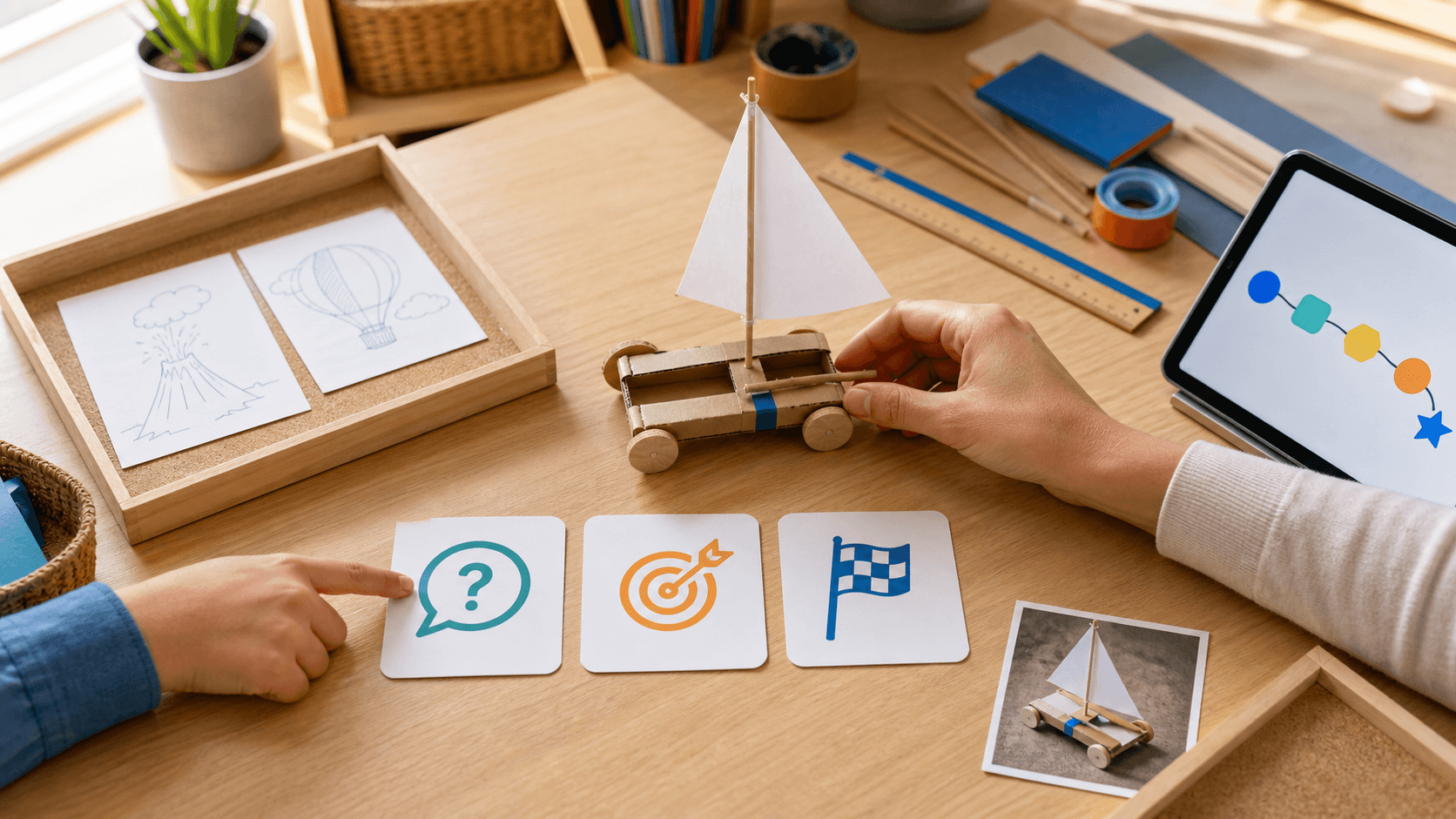
Mastery-based learning solves a parent problem that grades and seat-time often hide: how do you know whether a child is ready to move on? A correct answer today is useful, but it is not enough on its own.
Use three proofs. First, can the child explain the idea in their own way—with words, objects, a sketch, or an example? Second, can they apply it in a slightly different task rather than repeat the same format? Third, can they retrieve it after a gap, without rebuilding the lesson from zero?
The three proofs do not have to look the same for every learner. A gifted or high-IQ child may need a deeper transfer task. A child with ADHD, an autistic learner, or a twice-exceptional / 2e profile may show understanding better through a short oral explanation, manipulatives, or a low-sensory review. Adjust the pace, explanation style, sensory load, review, and challenge—not the integrity of the learning goal.
If one proof is missing, the answer is usually not more seat-time. Choose one focused repair: a new example, a clearer model, a short retrieval round tomorrow, or a real-life application. That keeps review finite and prevents both rushing ahead and trapping a child in repetitive worksheets.
SchoolQuest AI is the structured learning OS inside the Little AI Minds Universe. It can connect a skill to a mission, a mastery check, a later review, and a parent-visible portfolio note, so moving on becomes an evidence decision rather than a guess.
Keep the boundary clear: mastery evidence supports family learning decisions. It is not a diagnosis, therapy, a guaranteed outcome, or a promise of legal school equivalence in every country.
A calm rule is enough: explain it, use it somewhere new, and find it again later. When all three are visible, move forward—and keep a light review loop so mastery stays available.
Next decision
Turn a guide into a concrete family step
Choose the next route based on what you are deciding now: a first calm week, complete Grade 1-6 coverage, family fit before you create an account, or phone/tablet use for gifted/high-IQ, ADHD, autistic, 2e, and mixed-pace learners.
Start with one calm week
Use the starter guide when your family needs a practical rhythm for attention, confidence, sensory load, and different learning paces before changing everything.
Open starter guideCheck full primary coverage
Open the program map when you need to see how math, reading, writing, science, geography, projects, life skills, and portfolio evidence fit together.
Open program mapUse both apps as one family path
Use SchoolQuest AI for weekly rhythm, mastery checks, records, and parent review. Add Little AI Minds when core learning is done and a bigger creative AI project makes sense.
See the family bundle pathDecide whether SchoolQuest fits now
Review the fit signals families should understand before joining: High-IQ, ADHD, autism, 2e, mixed learning styles, boundaries, help rhythm, and what should be clear before any paid access.
Review family fitTry the app surface on devices
Use the install page when you want the learning area and parent view on a phone or tablet while articles, pricing, and legal information stay in the browser.
Open install guideAI Homeschooling Starter Guide
Get the starter guide
Join the guide list and we will use this interest signal to send the right next steps.