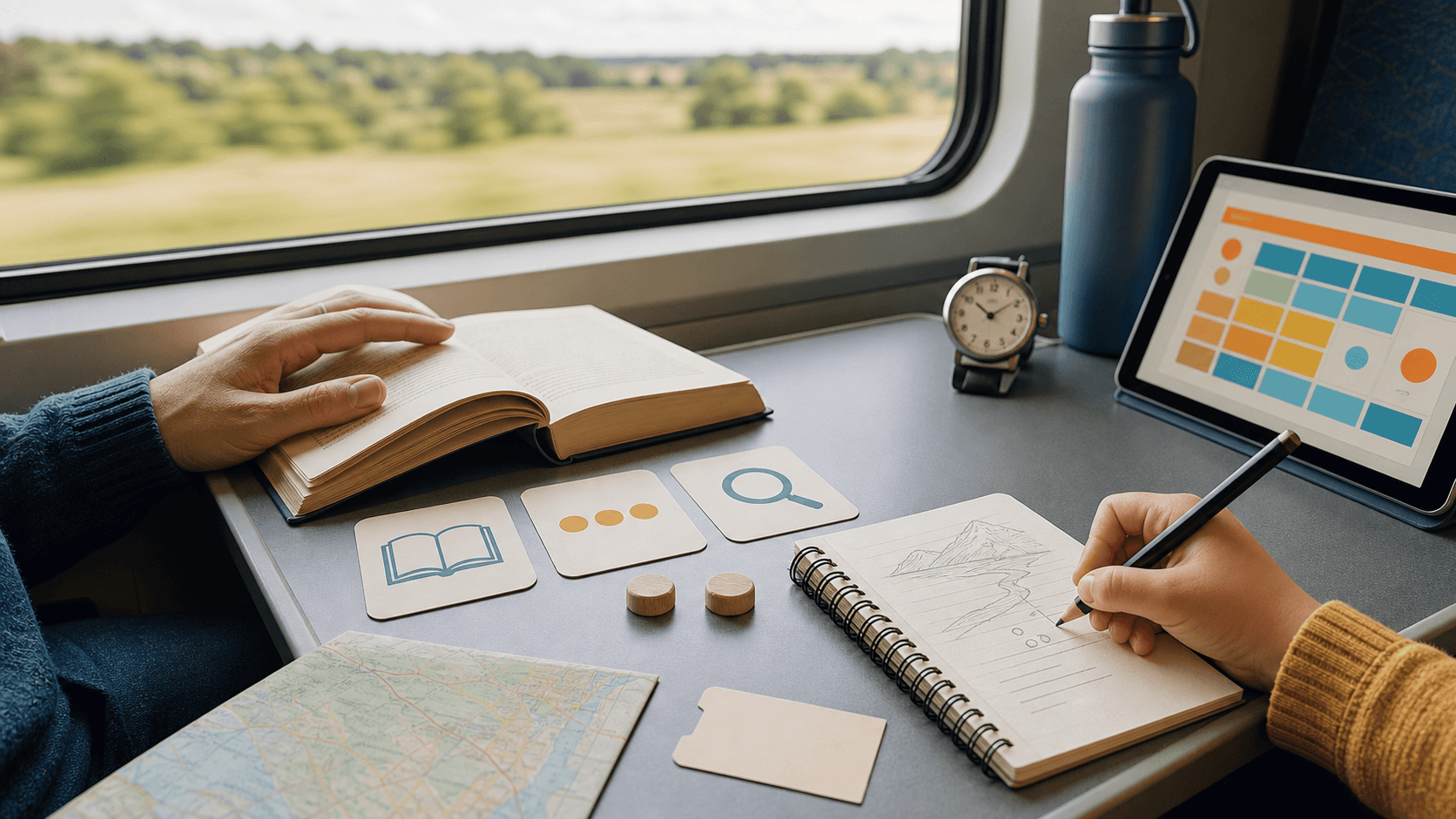
A museum visit can become exhausting when every room is supposed to prove geography, history, art, reading, and a full day of learning. It can also feel disappointing when a child notices something fascinating and the family rushes on. A smaller goal is often more useful: let one object carry one learning thread.
Choose an object that genuinely catches attention: a shell, tool, textile, map, animal model, painting detail, or everyday vessel. Start with observation, not a quiz. Ask what can be seen, what material it might be, or what detail seems unusual. If the answer is not visible, it is enough to say that it needs checking later.
Keep the thread to four gentle moves: observe one object; ask one question; make one sketch or photo-free note; share one idea afterwards. The sketch can be rough. The point is not artistic quality or a museum worksheet. It gives a child something concrete to return to when the family is back at the hotel, home, or next stop.
A useful record is one short parent note: the object, the child’s question, the action taken, and the next possible connection. For example: “Looked closely at a shell model; asked why its shape spirals; drew the pattern; later compare real shells.” This is a family learning record, not an official transcript, legal compliance advice, or proof of mastery.
SchoolQuest AI, part of the Little AI Minds Universe, can help a family keep the structured side visible: a question, a subject connection, a review point, and one light portfolio signal. If the thread naturally becomes a creative story, illustrated field guide, or respectful mini-exhibit after the core observation is complete, the SchoolQuest AI + Little AI Minds family path can give that broader project a home. Do not add the creative extension just to make a visit look productive.
Before the next visit, choose only one open thread to revisit. A child may want to read more, measure a spiral outside the museum, compare a local object, or simply leave the question open. Worldschooling works better when curiosity has a clear place to land and a clear point where the day can stop.
Next decision
Adult learning guide
Creating an adult account is free. Prepared paid practice requires an active SchoolQuest plan; a free account alone does not unlock it.
Adult learning guide
The app offers exercises compatible with the chosen grade and cycles through the selected skill. Prepared explanations and answer feedback help with practice; open written work may need an adult to review it.
Adult learning guidePrepared curriculum
These figures describe the authored curriculum catalogue. The local app offers its compatible prepared exercises; catalogue totals are not a promise of cloud tutoring, certification or every former feature.
Prepared curriculumOther apps have separate scope
These SchoolQuest plans pay for the local SchoolQuest practice described here. They do not create a combined subscription or promise features from Little AI Minds or another app. Check any other app’s current scope and terms separately before buying.
Other apps have separate scopePlans and scope
Creating an adult account is free. Prepared paid practice requires an active SchoolQuest plan; a free account alone does not unlock it.
See prices and orderBrowser app on your device
The app works in a compatible browser. Installing a home-screen shortcut does not add cloud sync or guarantee offline access. Online authentication and parent checks are still required.
Read the device guideAdult learning guide
Contact support
This guide is already public. If you submit the optional form, your adult email, consent and app-interest choice are sent online and stored for that request. Do not include child details. Learning-place JSON backups remain separate.