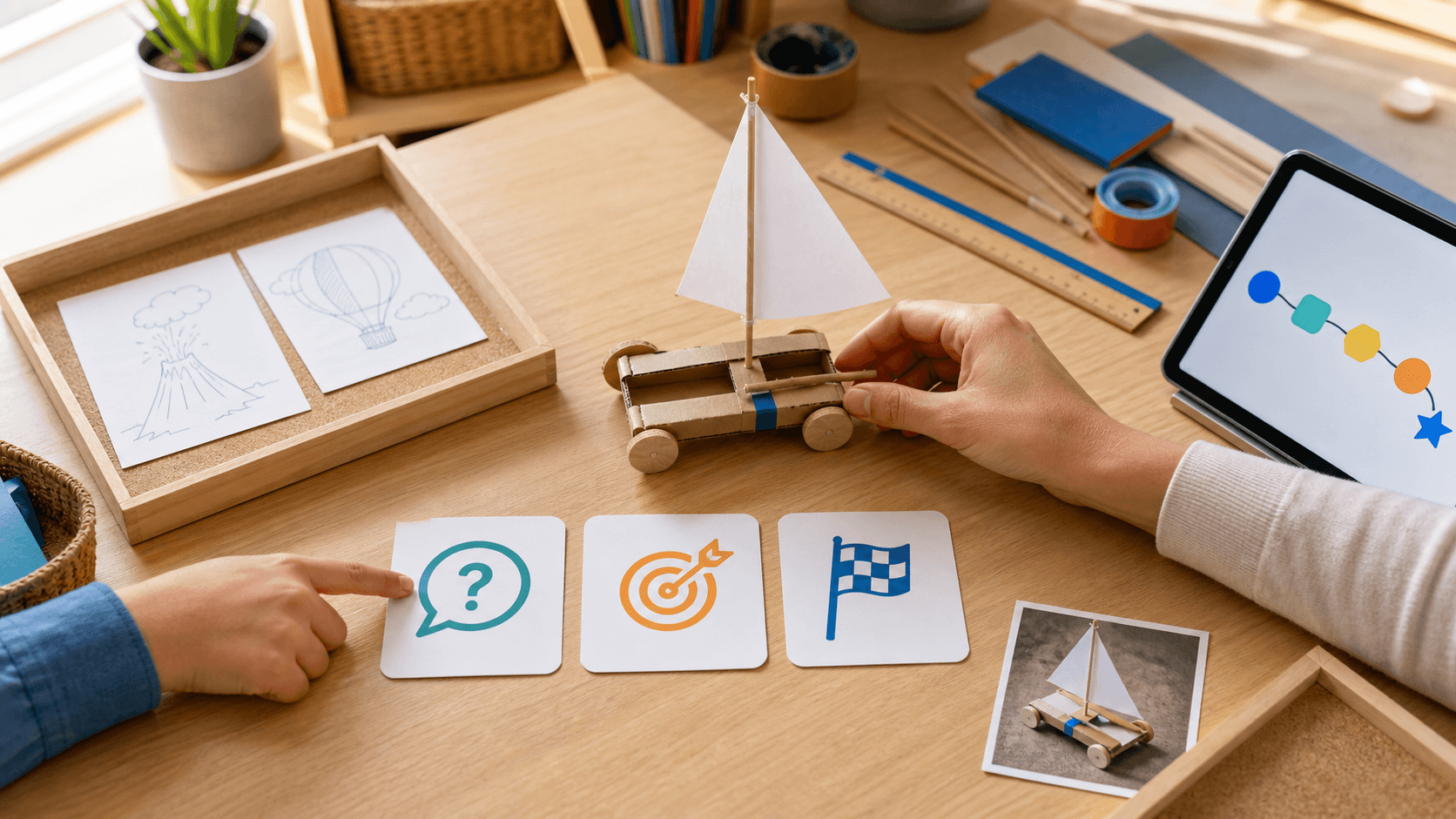
A flexible homeschool or worldschool plan can follow real interests and still leave a parent wondering whether an important subject has quietly disappeared. The answer is not necessarily a fuller daily timetable. A short monthly coverage check can protect breadth while daily learning stays adaptable.
Review six domains: mathematics; reading and writing; science; geography, history, and world context; creative and practical projects; and movement, communication, and wellbeing. Ask for one recent learning moment in each domain. A book discussion, measurement during cooking, field-note sketch, model, conversation, or movement routine can count when it shows real engagement.
Mark each domain as visible, light, or missing. Visible means there is recent evidence. Light means the domain appeared but needs another meaningful encounter. Missing means it has not surfaced this month. These are planning signals, not grades and not a reason to manufacture six worksheets.
Choose only one repair for the next month. Add a short mission, connect the missing domain to a current interest, or plan one cross-subject project. A map-making project can combine geography, writing, measurement, and art; a nature observation can connect science, vocabulary, drawing, and reflection.
This works especially well for gifted, high-IQ, ADHD, autistic, and twice-exceptional / 2e learners whose pace, output, sensory load, or challenge needs may vary by subject. The check protects a broad program without forcing identical time or output everywhere. It is learning design, not diagnosis, therapy, cure, or a guaranteed outcome.
SchoolQuest AI, part of the Little AI Minds Universe, connects subjects, skills, missions, mastery checks, and portfolio evidence in one Program Map. Parents can see which domains are active and choose a focused next step without rebuilding the whole week.
Repeat the check monthly, keep the note short, and compare direction rather than volume. The useful question is not whether every box was filled every day, but whether the family can see a balanced path and one sensible next move.
Next decision
Turn a guide into a concrete family step
Choose the next route based on what you are deciding now: a first calm week, complete Grade 1-6 coverage, family fit before you create an account, or phone/tablet use for gifted/high-IQ, ADHD, autistic, 2e, and mixed-pace learners.
Start with one calm week
Use the starter guide when your family needs a practical rhythm for attention, confidence, sensory load, and different learning paces before changing everything.
Open starter guideCheck full primary coverage
Open the program map when you need to see how math, reading, writing, science, geography, projects, life skills, and portfolio evidence fit together.
Open program mapUse both apps as one family path
Use SchoolQuest AI for weekly rhythm, mastery checks, records, and parent review. Add Little AI Minds when core learning is done and a bigger creative AI project makes sense.
See the family bundle pathDecide whether SchoolQuest fits now
Review the fit signals families should understand before joining: High-IQ, ADHD, autism, 2e, mixed learning styles, boundaries, help rhythm, and what should be clear before any paid access.
Review family fitTry the app surface on devices
Use the install page when you want the learning area and parent view on a phone or tablet while articles, pricing, and legal information stay in the browser.
Open install guideAI Homeschooling Starter Guide
Get the starter guide
Join the guide list and we will use this interest signal to send the right next steps.