A child explains a science idea clearly, points out the pattern in a math model, or tells a coherent story—and then freezes at the blank page. Homeschooling parents often face a hard choice: count the understanding, or insist on a written product before moving on?
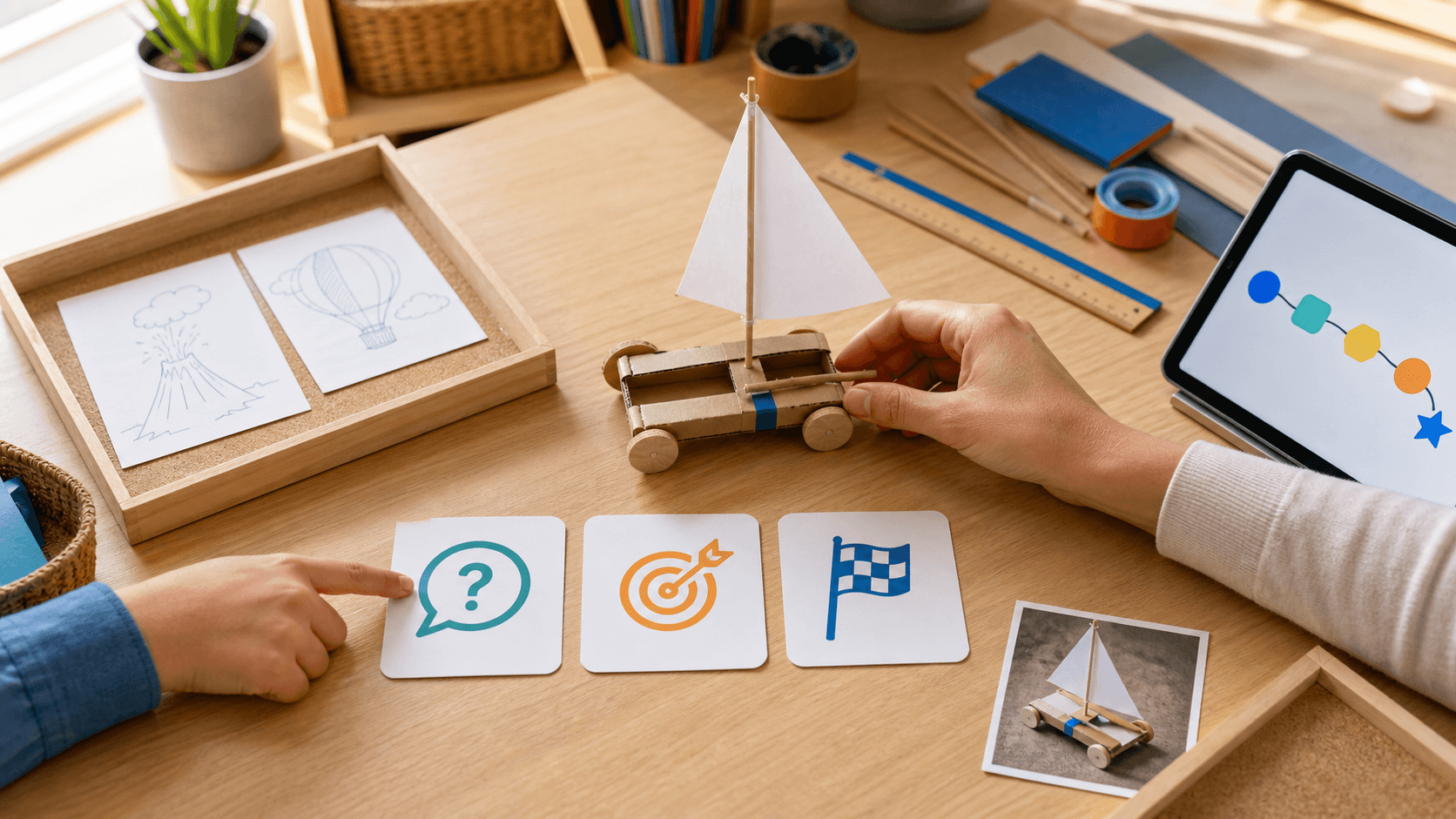
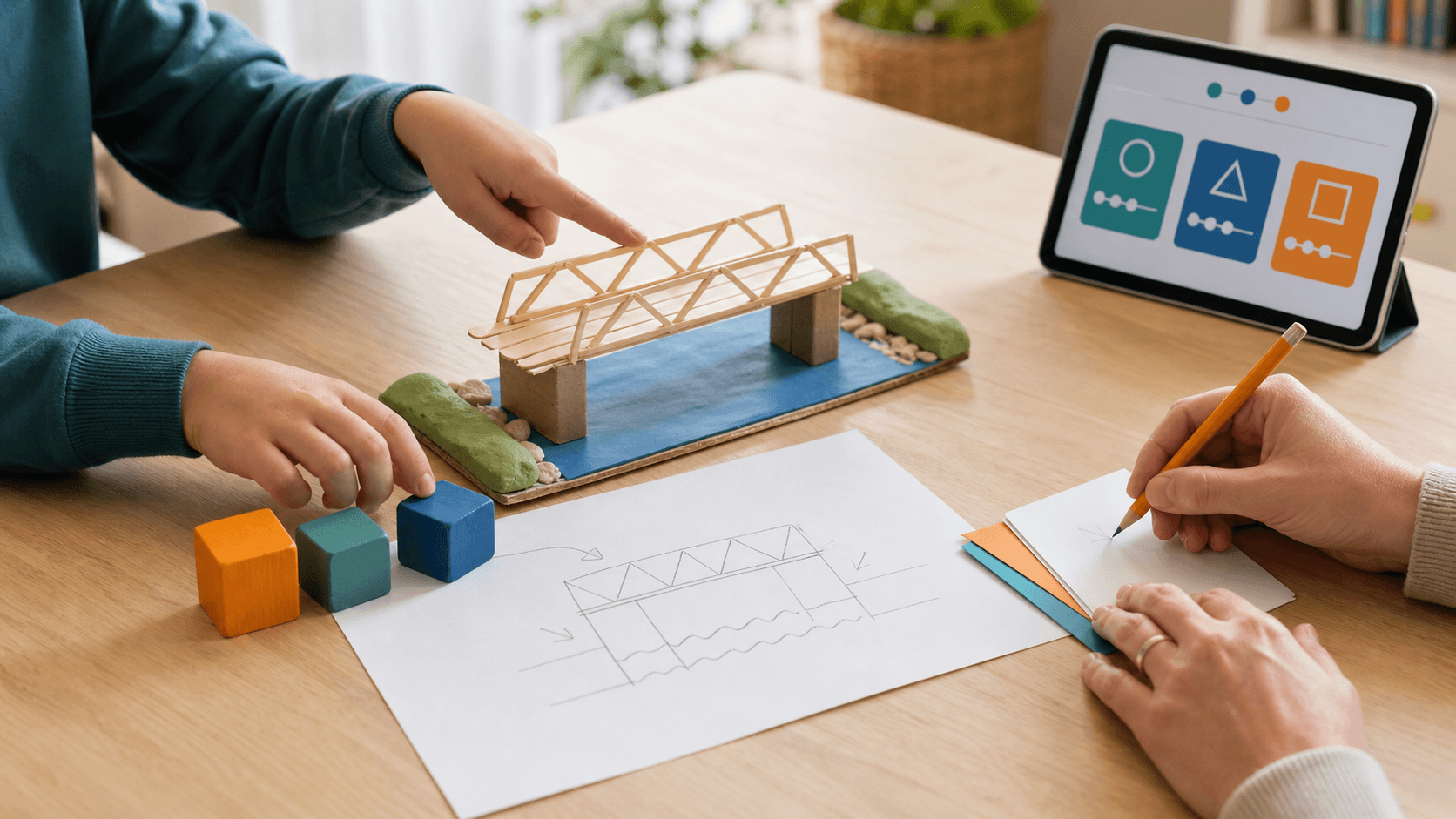
Separate the learning goal from the output bottleneck. If the goal is understanding habitats, fractions, or cause and effect, first invite the child to explain it aloud, show it with objects, sketch it, or answer a few focused questions. Capture one short parent note about what was demonstrated. That is evidence of understanding, not a reason to stop teaching writing.
Then add a small writing bridge. Ask for one label, one sentence stem, three key words, a caption under the sketch, or a dictated sentence that the child later copies or edits. The next session can increase the written share. This protects the subject challenge while handwriting, spelling, planning, or keyboard fluency develops.
The bridge is especially useful when learning is uneven. A gifted or high-IQ child may think far beyond current written stamina. A child with ADHD, an autistic learner, or a twice-exceptional / 2e profile may show more in a short oral explanation, manipulatives, or a low-sensory sketch. Adjust pace, explanation style, sensory load, review, and challenge without turning the adaptation into a diagnosis or a lower expectation.
SchoolQuest AI is part of the Little AI Minds Universe. It can keep the subject mission, parent review, mastery check, and portfolio note connected, so families see both what the child understands and which output skill still needs practice. The parent remains the reviewer; the app should never convert one smooth answer into a broad claim about ability.
Use a simple three-part record: what the child explained, what object or sketch showed the idea, and the smallest written step completed independently. Keep the record brief. It is a family learning aid, not a diagnosis, therapy note, official transcript, legal compliance guarantee, or promised outcome.
The aim is not to avoid writing. It is to stop handwriting from hiding subject knowledge while writing grows in manageable steps. Explain it, show it, record one line, and choose the next written bridge.
Next decision
Turn a guide into a concrete family step
Choose the next route based on what you are deciding now: a first calm week, complete Grade 1-6 coverage, family fit before you create an account, or phone/tablet use for gifted/high-IQ, ADHD, autistic, 2e, and mixed-pace learners.
Start with one calm week
Use the starter guide when your family needs a practical rhythm for attention, confidence, sensory load, and different learning paces before changing everything.
Open starter guideCheck full primary coverage
Open the program map when you need to see how math, reading, writing, science, geography, projects, life skills, and portfolio evidence fit together.
Open program mapUse both apps as one family path
Use SchoolQuest AI for weekly rhythm, mastery checks, records, and parent review. Add Little AI Minds when core learning is done and a bigger creative AI project makes sense.
See the family bundle pathDecide whether SchoolQuest fits now
Review the fit signals families should understand before joining: High-IQ, ADHD, autism, 2e, mixed learning styles, boundaries, help rhythm, and what should be clear before any paid access.
Review family fitTry the app surface on devices
Use the install page when you want the learning area and parent view on a phone or tablet while articles, pricing, and legal information stay in the browser.
Open install guideAI Homeschooling Starter Guide
Get the starter guide
Join the guide list and we will use this interest signal to send the right next steps.